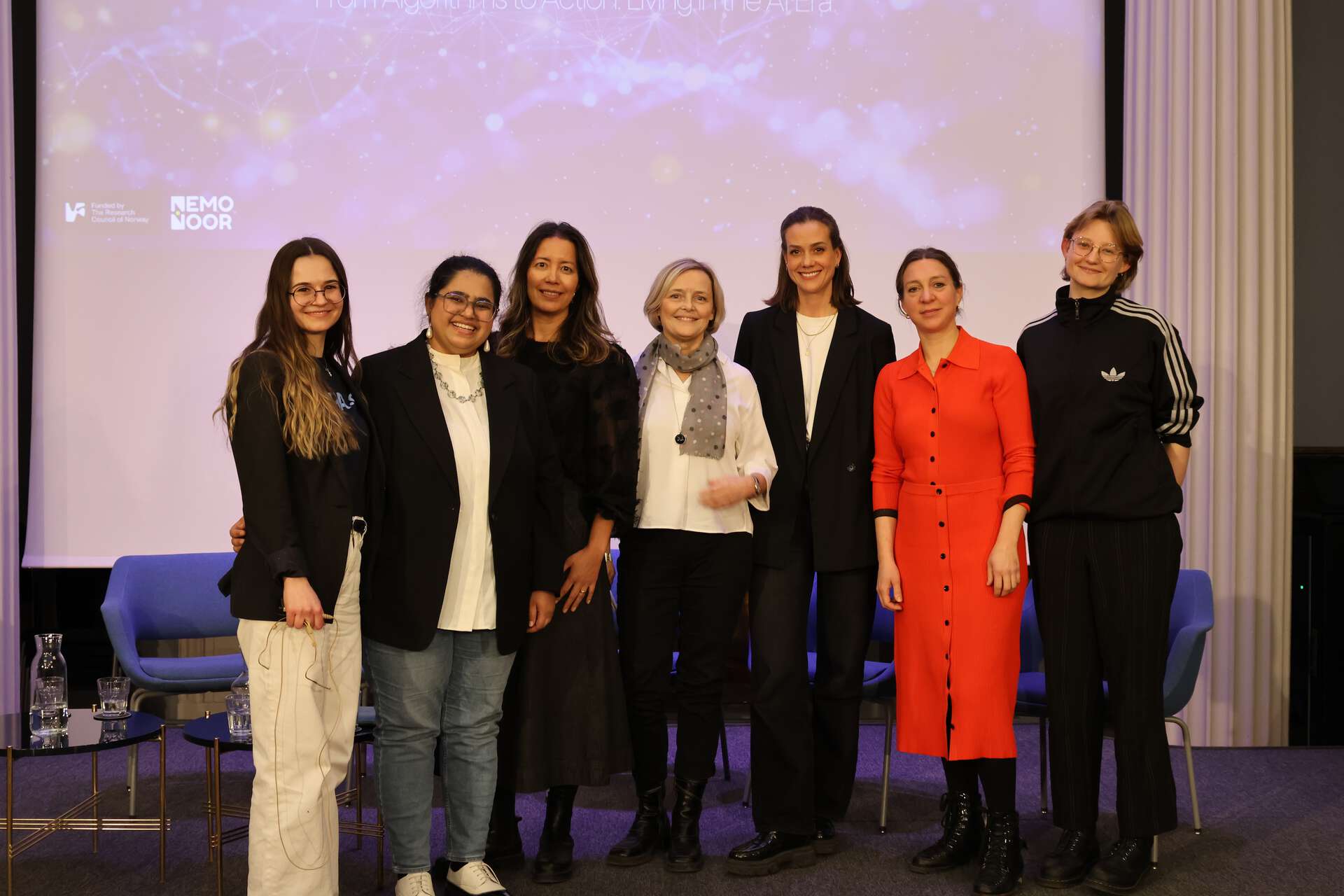
Why it matters who builds AI
When we talk about women being underrepresented in AI, it's easy to frame it purely as a fairness issue. But underrepresentation has real consequences for the technology itself. When the people designing AI systems don't reflect the diversity of those systems affect, we end up with tools that encode bias and overlook entire groups. When women are absent from the discussions, their perspectives are absent from the product — and that has consequences for all of us.
That's the argument for events like this. Not just visibility for its own sake — but because the field is quite literally shaped by who is in it.
Four perspectives. One urgent question.
The afternoon opened with four keynote speakers whose work, taken together, offered a panoramic view of what it means to live and work in the AI era.
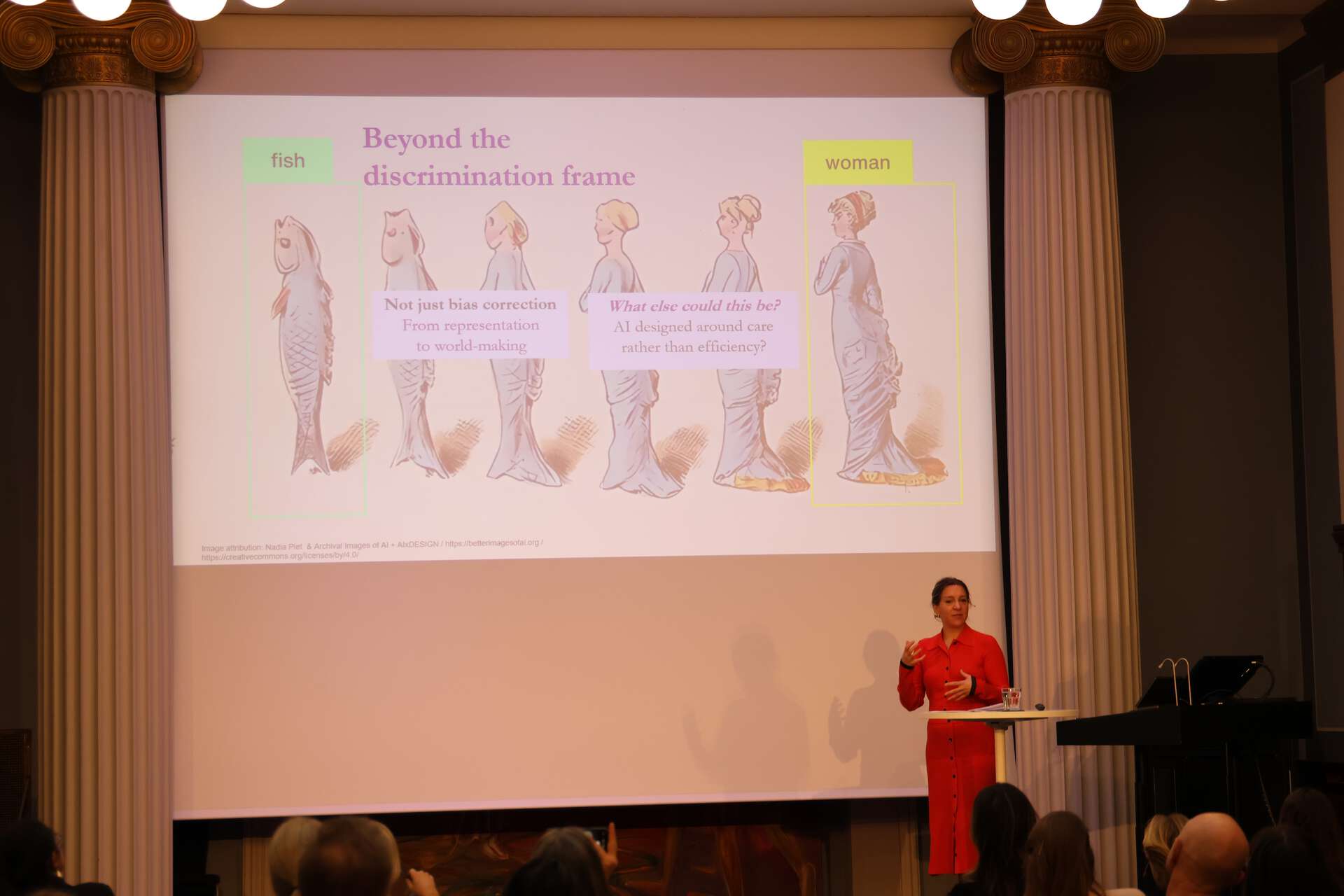
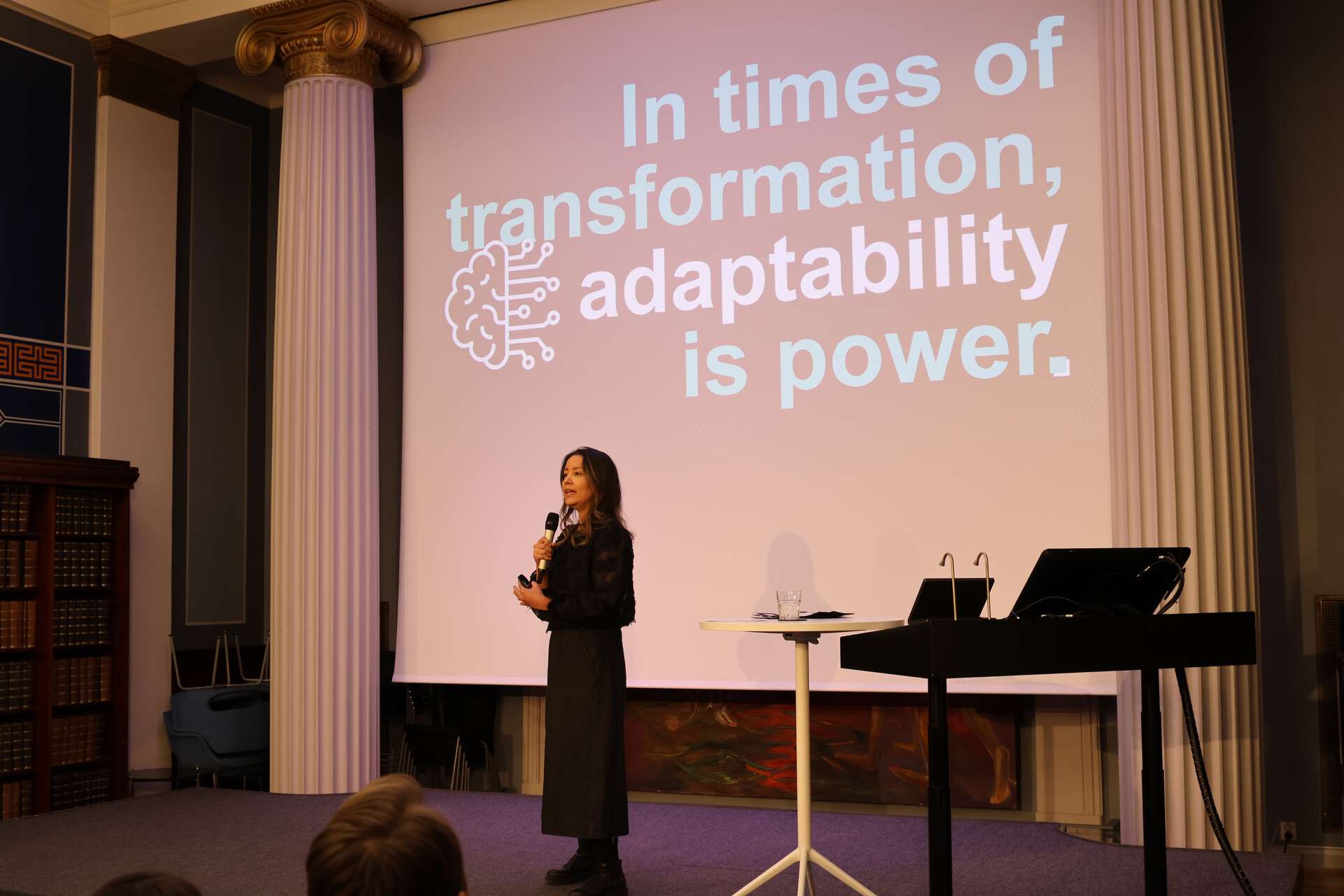
Dr. Taina Bucher, professor at the University of Oslo, set the tone with a provocation that stayed with the room: "AI is not a mirror, but rather a prism — refracting reality in particular directions." Her talk, Imagining AI Otherwise, reminded us that the assumptions baked into AI systems are not neutral — they reflect particular visions of the world. She asked what it might look like if AI were designed around care rather than efficiency and reminded the audience that in an age of AI, what makes us humans can be our greatest strength rather than our greatest vulnerability.
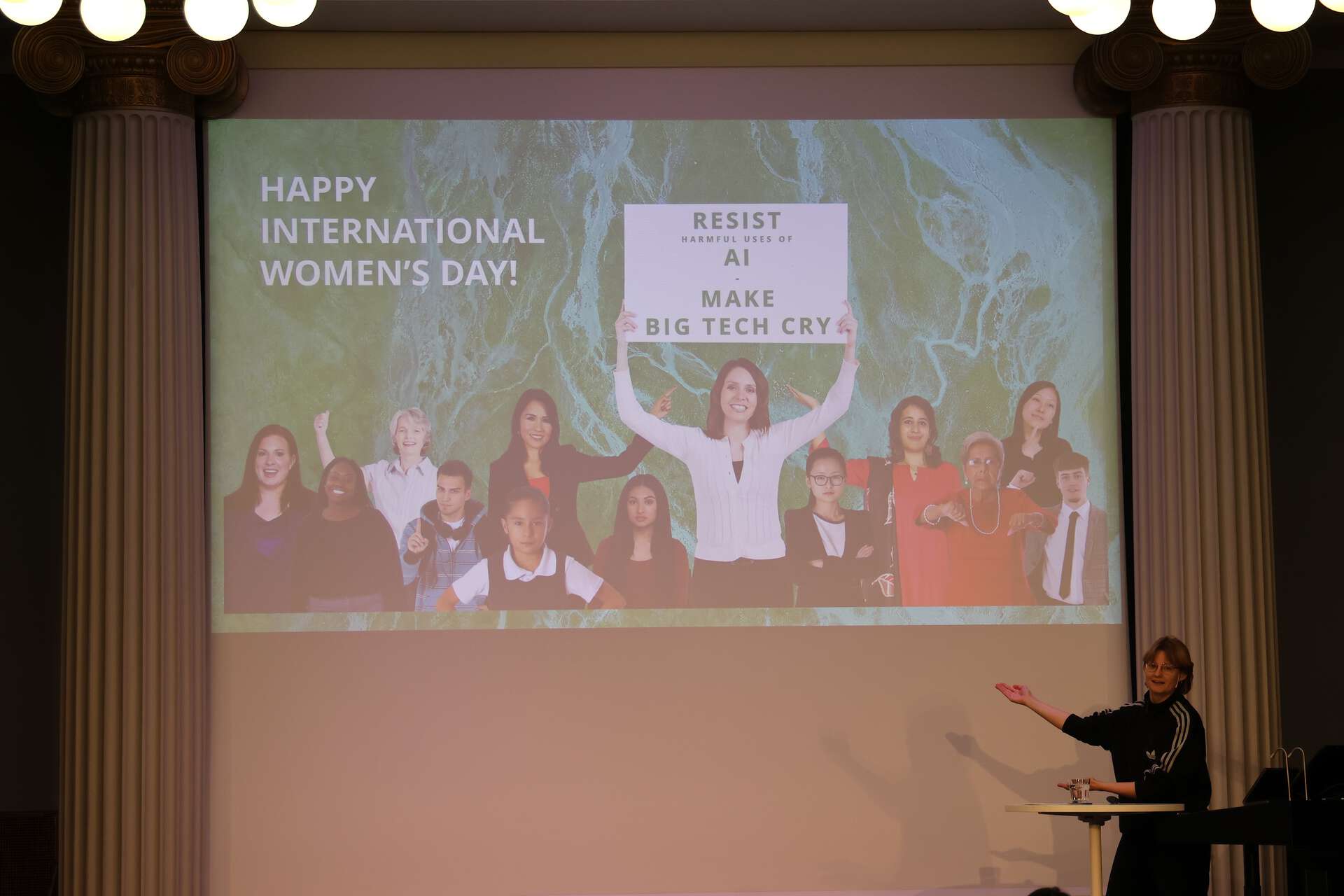
Dr. Lisa Reutter Larsen, researcher and postdoc at CAISA, continued the critical thread with a sharp focus on power. Who actually builds the AI models and systems shaping our societies? A remarkably small number of companies, she pointed out — and that concentration of power deserves our full attention. In a move that drew both laughter and recognition from the audience, she challenged the name of the event itself, offering alternatives including Women Researching AI Power Monopolies and Women Opposing Harmful Uses and Visions of AI. It was a reminder that even the language we use to frame these conversations carries assumptions worth questioning.
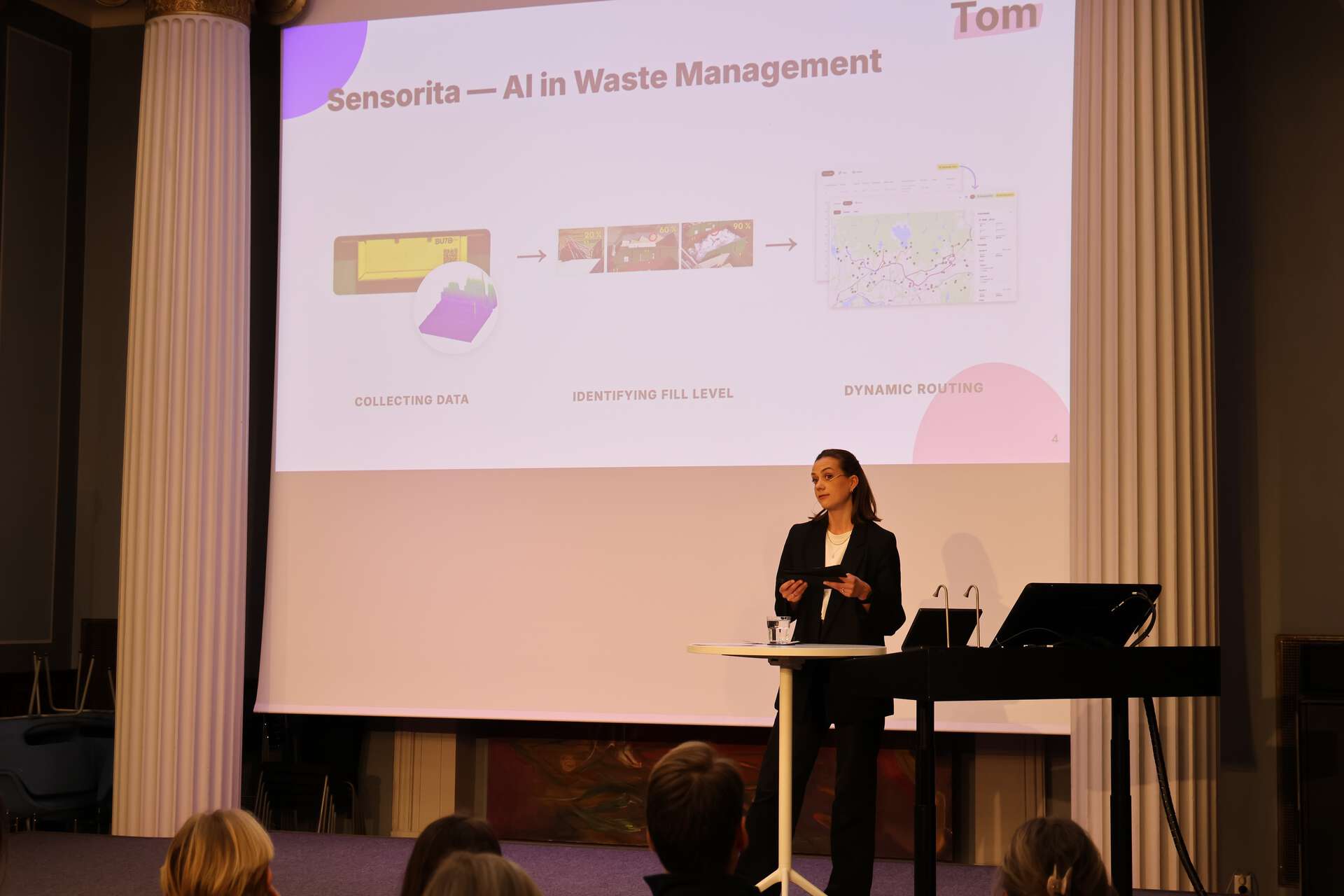
Julie Haga, Head of Engineering at TOM and Sensorita, brought the conversation into the world of building. Her startup has gone AI-native — using AI not only to improve code, but to open up coding itself to people with no prior technical background. In less than three years, she reflected, AI has fundamentally changed how she works as a developer. Her message to the room was direct: don't be afraid to use these tools. In the startup world, she noted, if you don't keep up, you risk not existing at all. It was a grounded, practical counterpoint to the more critical perspectives — and all the more valuable for it.
Dr. Carla Ferreira, Head of AI Risk and Assurance Science at DNV, closed the keynotes with a line that may have been the most quietly powerful of the afternoon:
"You don't have to start in AI to shape the AI era."
Her work focuses on making AI trustworthy enough to actually rely on — illustrated through case studies including the use of drones to make workplace inspections safer for workers. It was a concrete example of AI serving people, rather than the other way around.
The panel: governance, education, and getting more women in the room
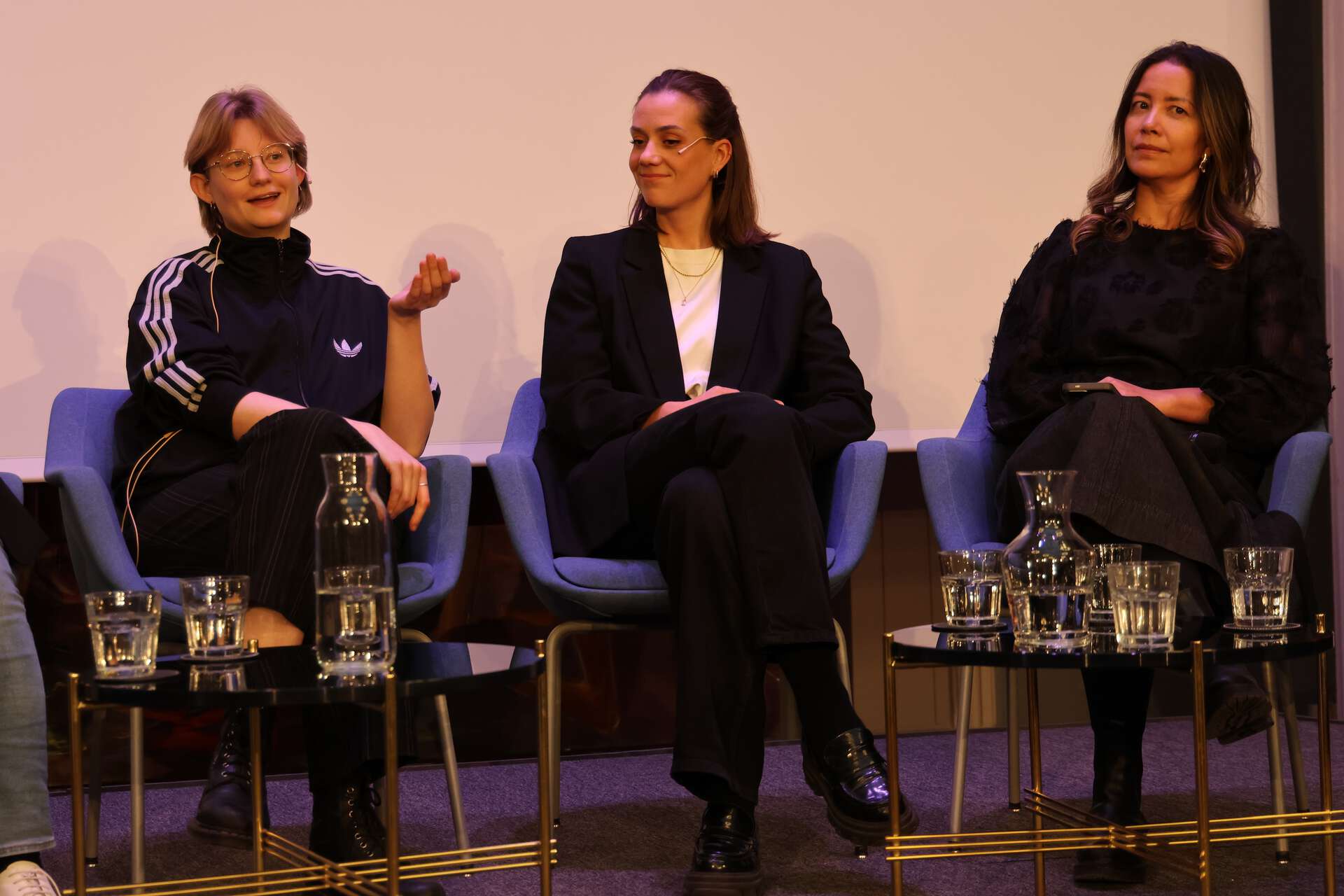
The keynotes were followed by a panel discussion moderated by Professor Ingrid Kristine Glad (UiO), joined by the four speakers and PhD candidate Kushagri Tandon (UiO) — whose perspective as an early-career researcher added an important dimension to the conversation.
The discussion covered significant ground. Data privacy emerged as a central concern, alongside a clear consensus that responsibility for ethical AI cannot fall on individuals alone — it must be structurally ensured through governance. The panel wrestled with a deceptively simple question: what should we protect in the AI era, and what should we improve? Kushagri offered a standout example: using AI tools to provide quality education to those who otherwise lack access to it — a reminder that the same technology that can concentrate power can, when deliberately designed, distribute opportunity.
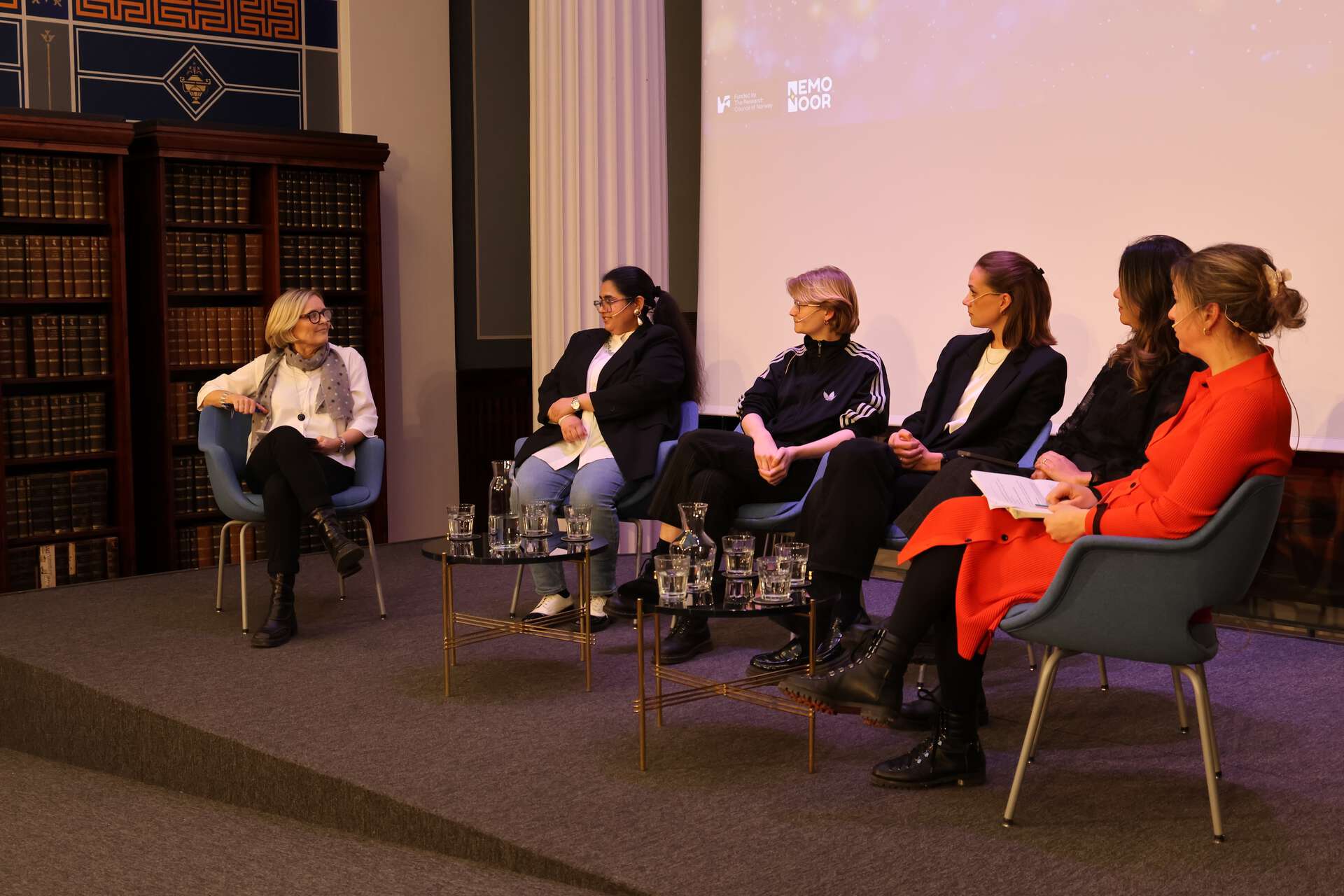
The conversation also turned to the question of how to attract more women to AI — to research it, develop it, govern it. The panel's answer, perhaps unsurprisingly, was clear: events exactly like this one matter. Not just for the knowledge exchanged, but for the signal they send about who belongs in this field.
What stayed in the room
After the panel, the room filled with exactly the kind of conversation we'd hoped to spark. Vivid discussions, laughter, and the sense that people were continuing the themes of the afternoon with each other rather than leaving them at the door.
That, in the end, is what this was for. Not to resolve the questions AI raises — those will take much longer, and much broader effort. But to bring together the people who are already working on them, make their work visible, and remind anyone who's still figuring out where they fit: you belong in this conversation.
Watch online
Did you miss the event? You can now watch it in its entirety on our YouTube channel.
 | This event was co-funded by the European Union's DIGITAL EUROPE Programme, under Grant Agreement No. 101255754, and the Research Council of Norway under Project No.363425. |
|---|
