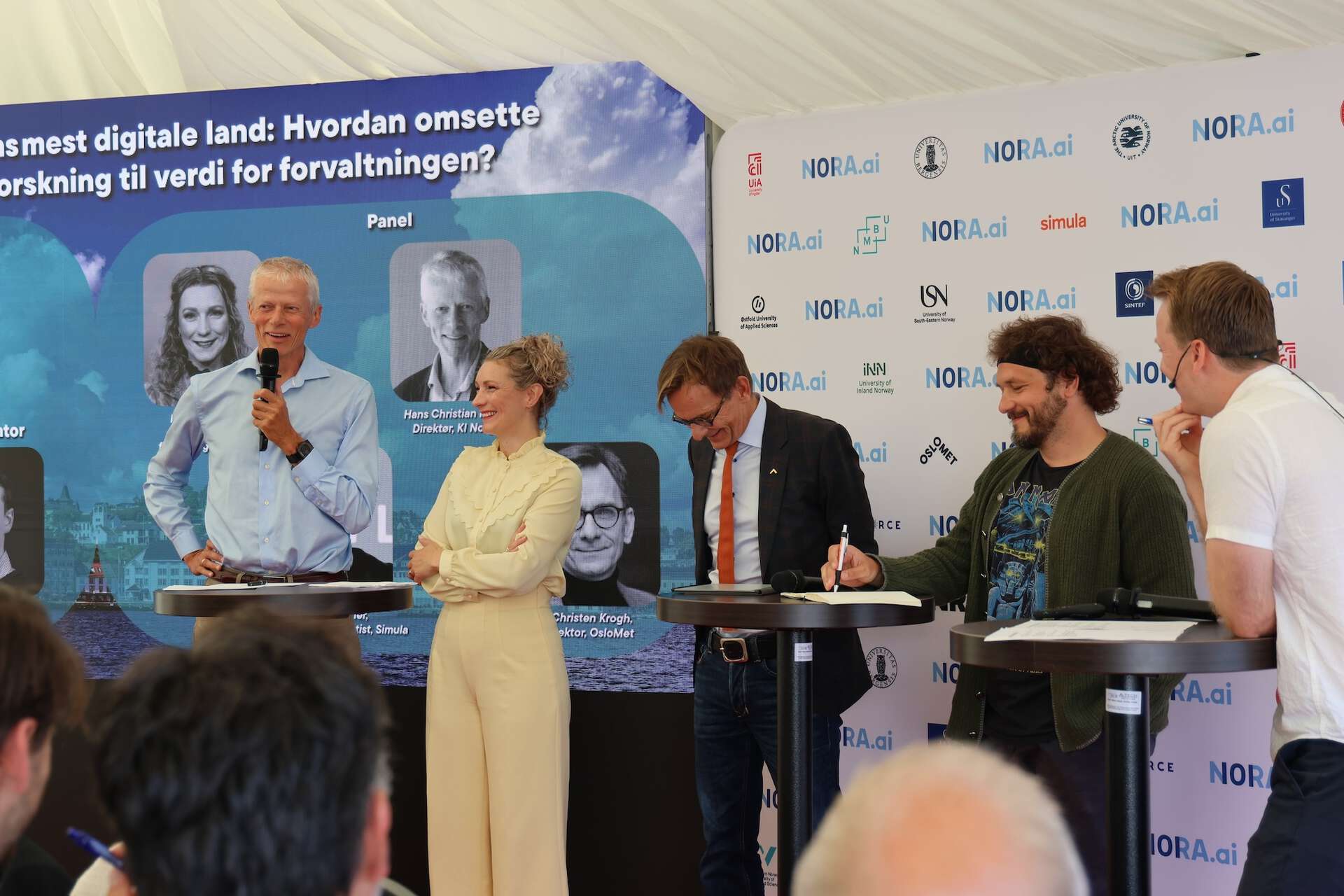
Once again, the AI Tent served as a shared arena for Norway’s AI community, with NORA-partners and other organisations from across the country contributing to a packed programme of talks, debates and conversations.
This year’s programme reflected just how broadly AI is beginning to shape Norwegian society. Over four days, discussions ranged from education, media and the creative industries to food production, preparedness, digital sovereignty, and national AI capacity.
From education and responsible AI to creativity and fundamental research
The week opened with discussions addressing how Norway should prepare for a society in which AI is increasingly embedded in education, research and working life.
The University of Bergen (UiB) and the National Centre for AI and Learning (AI LEARN) explored who should shape Norway’s digital future in education, raising questions about democratic control, technological sovereignty and the development of responsible AI tools for schools and universities.
TRUST – Norwegian Centre for Trustworthy AI brought together researchers from different disciplines to explore how AI can be made safer, more accurate, inclusive, sustainable and easier to control. The discussion highlighted the importance of interdisciplinary research and collaboration between researchers, industry, and policymakers in developing AI that society can trust.
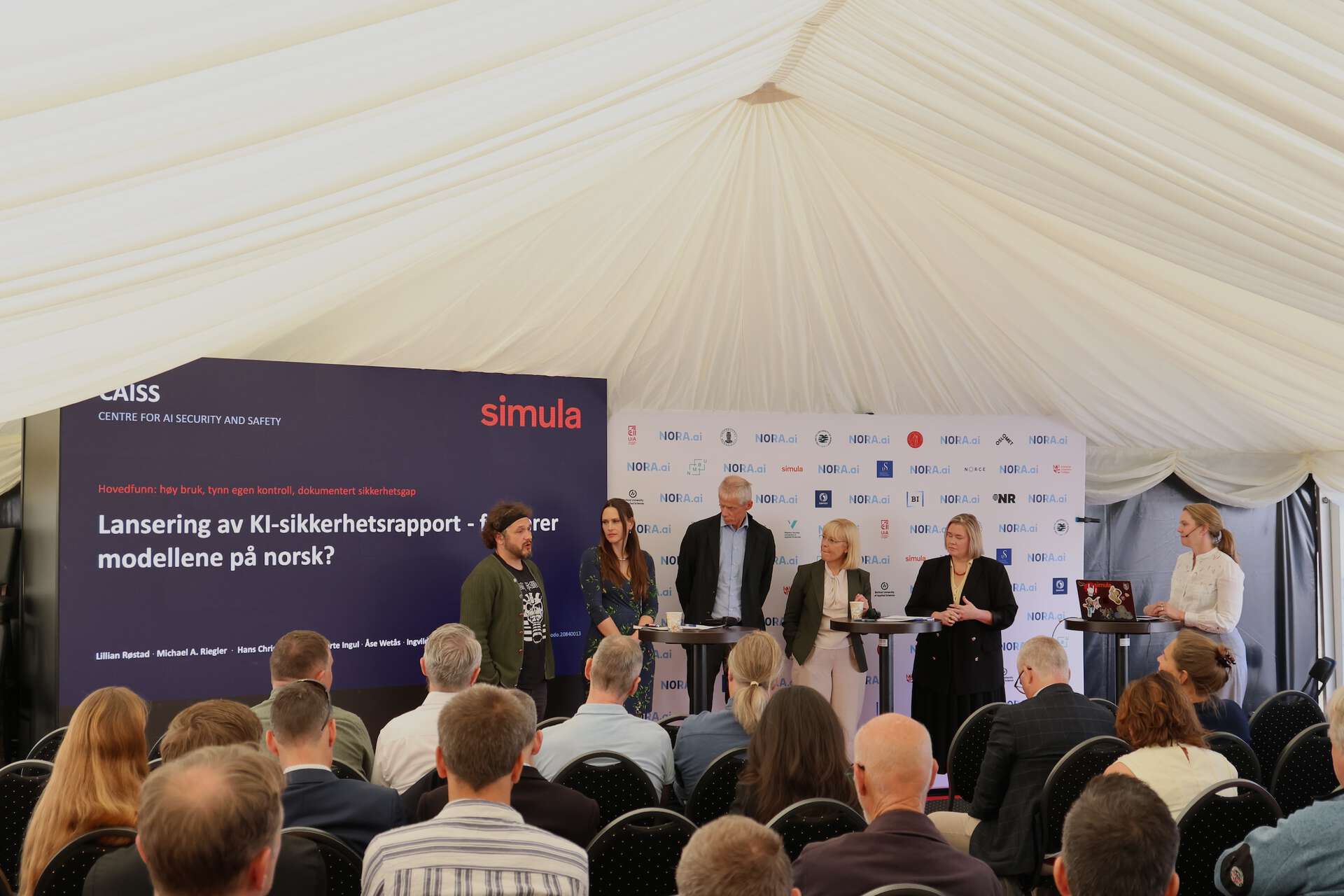
Responsible use of AI was also central to a session by SFI MediaFutures, which examined the rapid adoption of AI in Norwegian newsrooms. The discussion addressed how AI can support journalism and innovation while preserving public trust and the democratic role of the media.
The relationship between AI and creativity was another important topic. MishMash – the Norwegian Centre for AI and Creativity – together with Kristiania University of Applied Sciences and the University of Oslo (UiO), explored how artists, humanities scholars and creative practitioners can contribute to the development of more responsible, diverse and human-centred AI.
Integreat – Norwegian Centre for Knowledge-driven Machine Learning offered a glimpse into some of the latest developments at the AI research frontier. Researchers explored topics ranging from AI agents and their use in healthcare to explainability, foundation models, the carbon footprint of AI, and emerging world models.
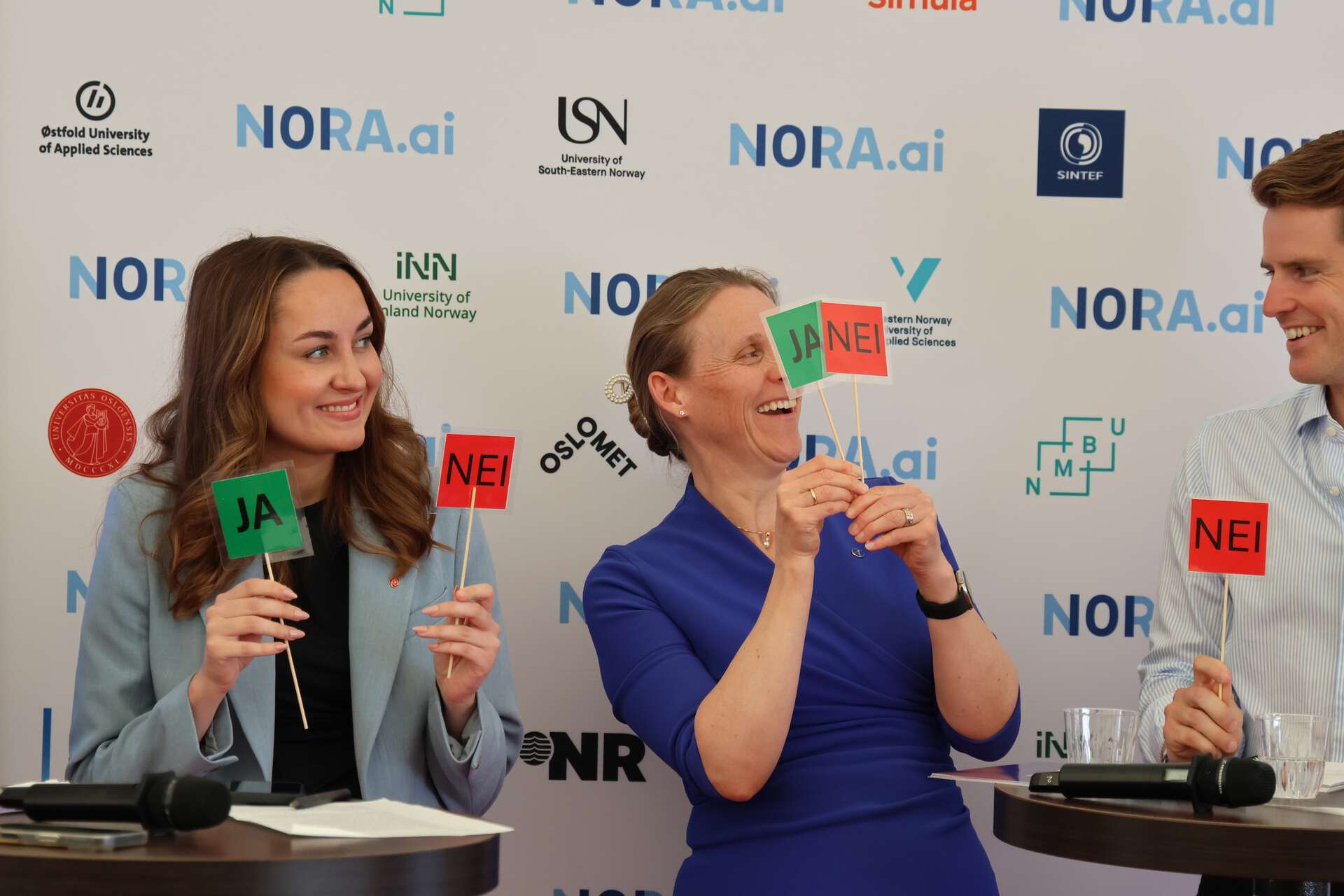
SURE-AI Centre for Sustainable, Risk-averse and Ethical AI explored whether the rapid development of AI is sustainable for society. The discussion considered the technology’s growing energy demands, its potential impact on jobs and the economy, and the risks that AI-generated misinformation and deepfakes could pose to democracy.
OsloMet examined how AI is changing journalism and the public’s relationship with news. The discussion focused on how algorithms and language models influence what we see and read, raising important questions about trust, democratic participation and responsibility as AI becomes increasingly embedded in the media landscape.
Later in the day, Western Norway University of Applied Sciences (HVL) turned the attention towards CERN, curiosity-driven research and international collaboration, asking how Norway can use its participation in CERN to strengthen long-term AI research and scientific innovation.
Turning Norwegian AI research into societal value
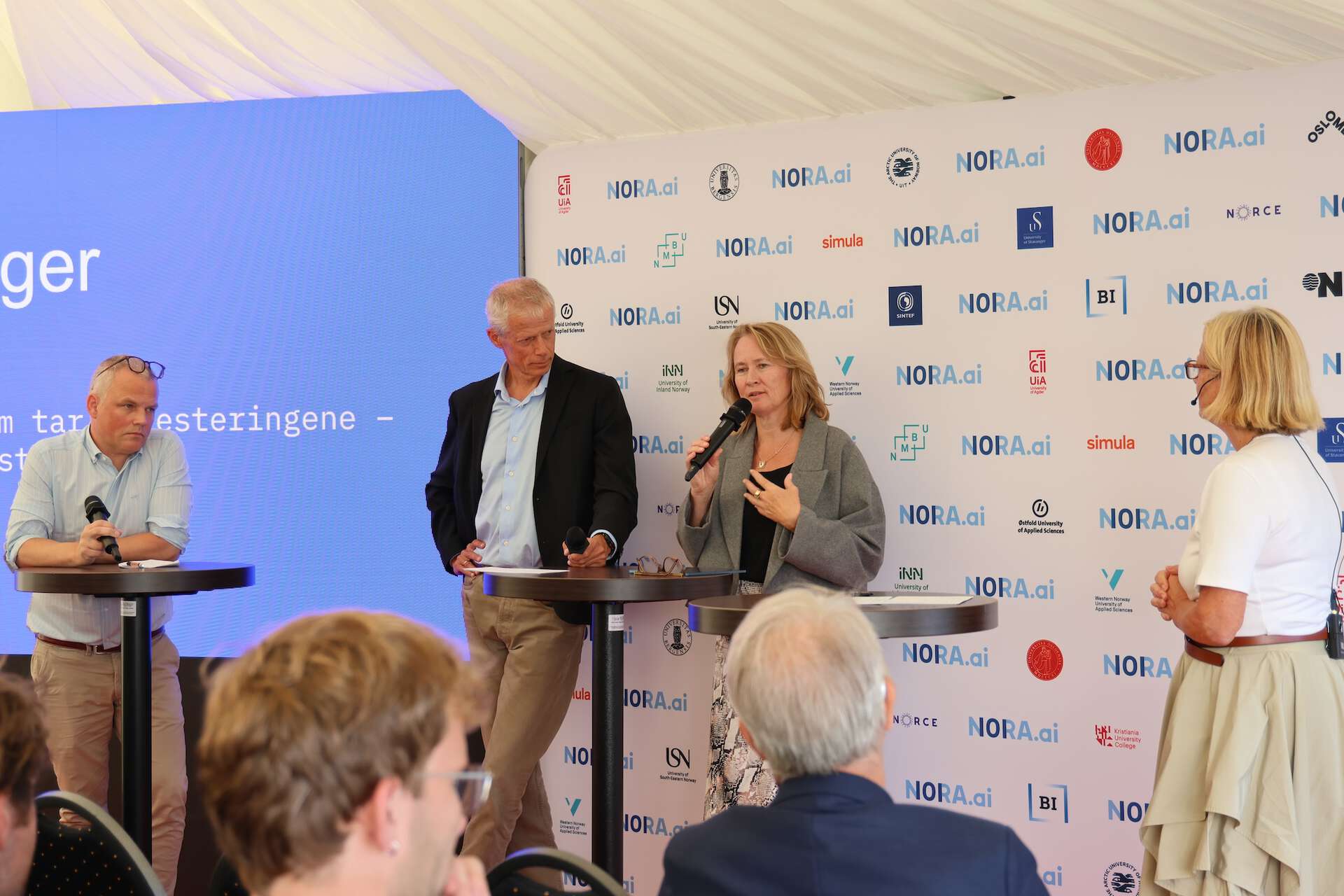
NORA and KI Norge continued the conversation by asking how Norway can turn its strong AI research environments into value for public administration and industry. As Norway aims to become one of the world's most digitalised countries, the discussion highlighted the importance of strengthening organisations' ability not only to adopt new technology, but also to understand, develop and make effective use of new research and knowledge.
NMBU subsequently brought AI into the fields of food production and natural resource management. The session explored how AI can support sustainable agriculture, animal welfare, and forestry while recognising the complexity of biological systems and the continued importance of domain expertise and human judgement.
NORCE explored whether increasingly accessible generative AI tools could reduce the need for traditional AI research and expertise. The debate highlighted how AI is lowering barriers to innovation while raising an important question: why do we still need strong research communities and deep technological expertise when anyone can build with AI?
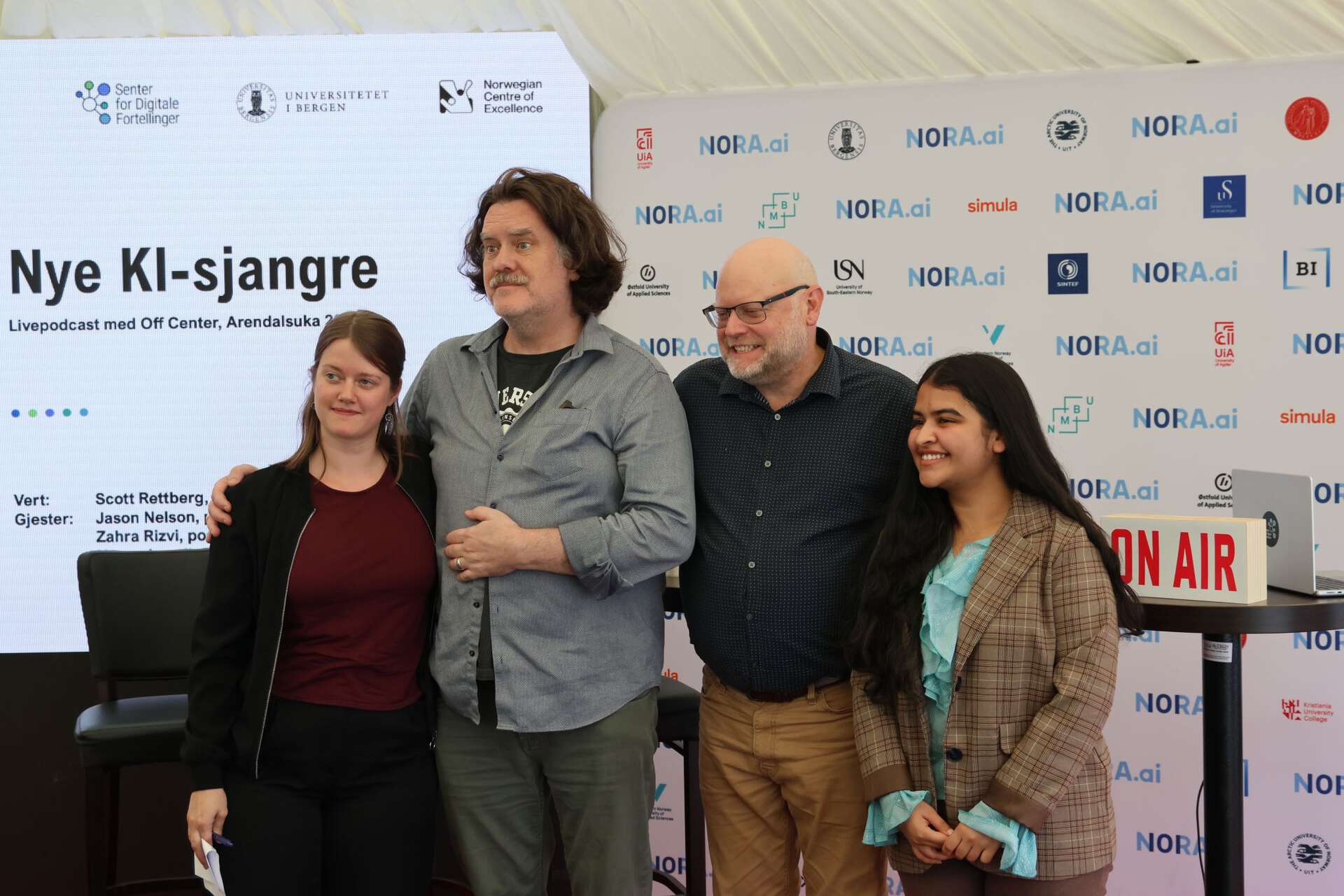
Kristiania University of Applied Sciences and NORA presented four PhD researchers working at the intersection of AI and societal challenges, highlighting research related to climate communication, healthcare, inclusion and human-centred innovation.
The Norwegian Computing Center explored how data and modelling can strengthen emergency preparedness as wildfires, floods and extreme weather become more frequent. The discussion focused on how better decision-making tools can support fairer and more effective allocation of limited fire and rescue resources during simultaneous crises.
The day concluded with Nkom and the University of Agder (UiA) looking ahead to 2036, exploring how AI could reshape our lives, jobs and society. The discussion highlighted technological development, ethical challenges, and the importance of regulation and trust in shaping the future of AI.
Digital sovereignty, preparedness and national AI capacity
On Thursday, attention turned towards some of the strategic questions that will determine Norway's long-term AI capabilities.
Researchers from UiB explored whether it is possible to share the value of data without giving up control of the data itself. The session demonstrated how research infrastructures, through federated database systems, can enable collaboration while strengthening data security, sovereignty, and local control.
Østfold University of Applied Sciences (OUAS) followed with a practical perspective on responsible AI, moving the conversation from principles and ambitions towards how organisations can implement responsible AI in practice.
The University of Inland Norway (INN) examined the risks of relying on AI for critical decision-making during crises. The discussion highlighted how AI can reinforce human biases and flawed reasoning, raising important questions about data quality, fairness, and the role of human judgement when decisions are made under pressure.
SFI Visual Intelligence and UiT The Arctic University of Norway (UiT) continued this discussion by focusing on the value of Norwegian AI expertise, domestically developed models and national innovation capacity. The session raised a fundamental question for Norway: how much of the technology and expertise underlying our future digital society should we be capable of developing and controlling ourselves?
These questions were also at the heart of a broader discussion on language models and digital sovereignty, bringing together leading actors from Norwegian research, language technology and national infrastructure to discuss what a Norwegian strategy for language models and digital sovereignty should look like.
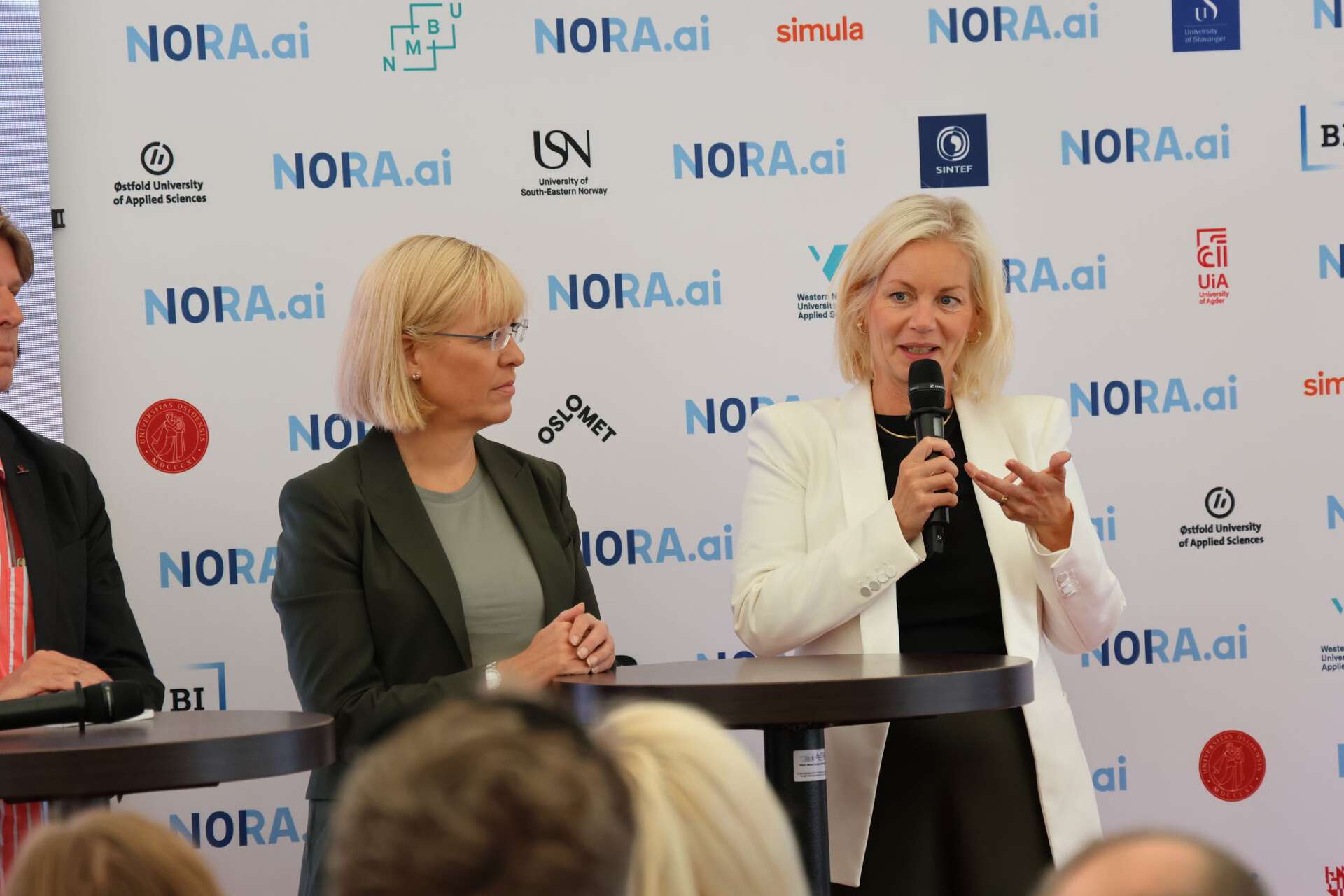
BI Norwegian Business School explored how AI is transforming economists’ work, from research and analysis to economic modelling. The discussion also highlighted key questions around quality, transparency, and trust as AI becomes an increasingly important tool in the field.
A new national arena for AI collaboration
The programme culminated on Thursday afternoon with the launch of a new national collaboration arena for AI.
The initiative is part of the Norwegian government's broader investment in AI research and aims to strengthen the connection between Norway's AI research environments and organisations applying AI in the public and private sectors.
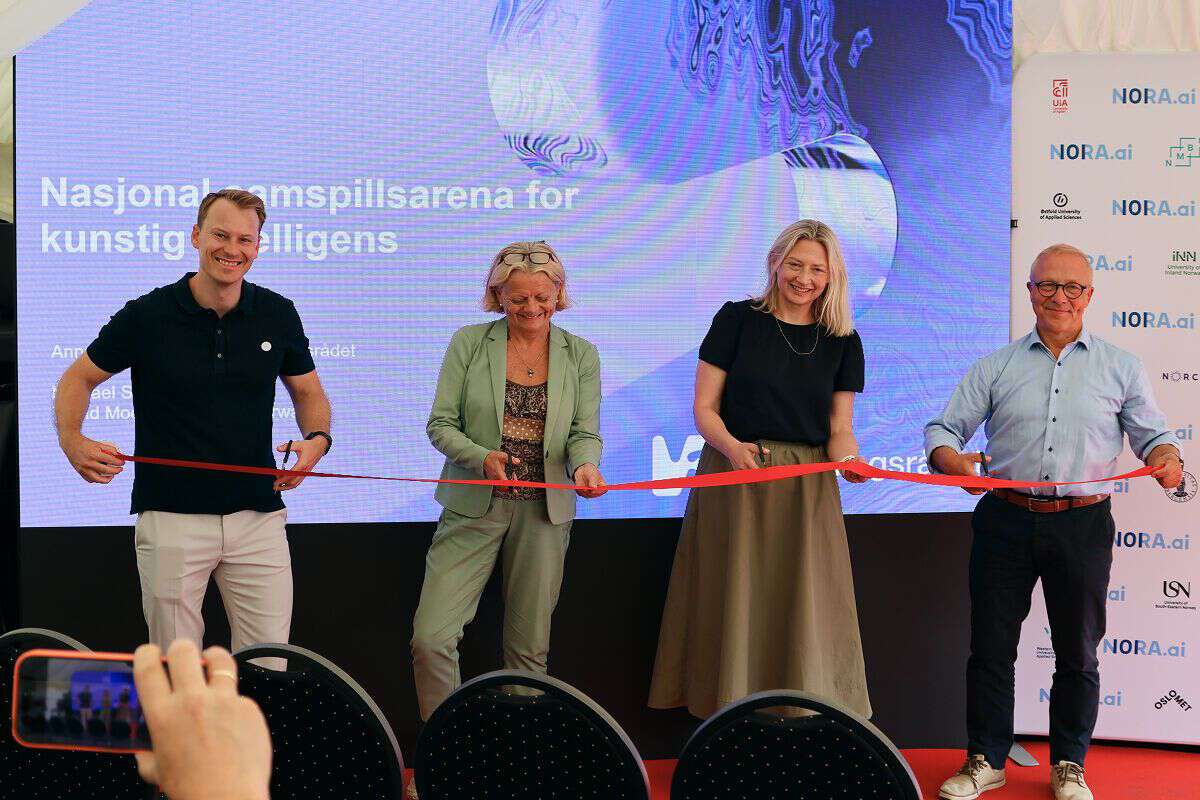
The ambition is clear: research results, knowledge, and expertise should not remain within research environments, but be shared, adopted, and transformed into societal and economic value.
For NORA, the initiative represents an important continuation of the work in general, and specifically what the AI Tent demonstrates in practice – creating meeting places where researchers, policymakers, businesses, public-sector organisations and society can come together around AI.
Bringing Norway's AI community together
Across the week, the AI Tent demonstrated the breadth of Norway's rapidly developing AI ecosystem.
The conversations were not limited to what AI can do. They also addressed the harder questions: Who should control the technology? What capabilities should Norway develop itself? How should AI be governed and used responsibly? How can research translate into innovation and societal value? And how do we ensure that people, institutions and democratic values remain at the centre of technological development?
By bringing these discussions together under one roof, the AI Tent once again provided a common meeting place for Norway's AI research, innovation community, policymakers and the wider public at Arendalsuka.
NORA would like to thank all participating institutions, organisers, speakers, panelists and visitors who contributed to this year's programme and helped make the AI Tent an important arena for knowledge-sharing, discussion and collaboration.
We look forward to continuing these conversations – and to strengthening the connections between AI research and society throughout the year.