
NORA RESEARCH SCHOOL
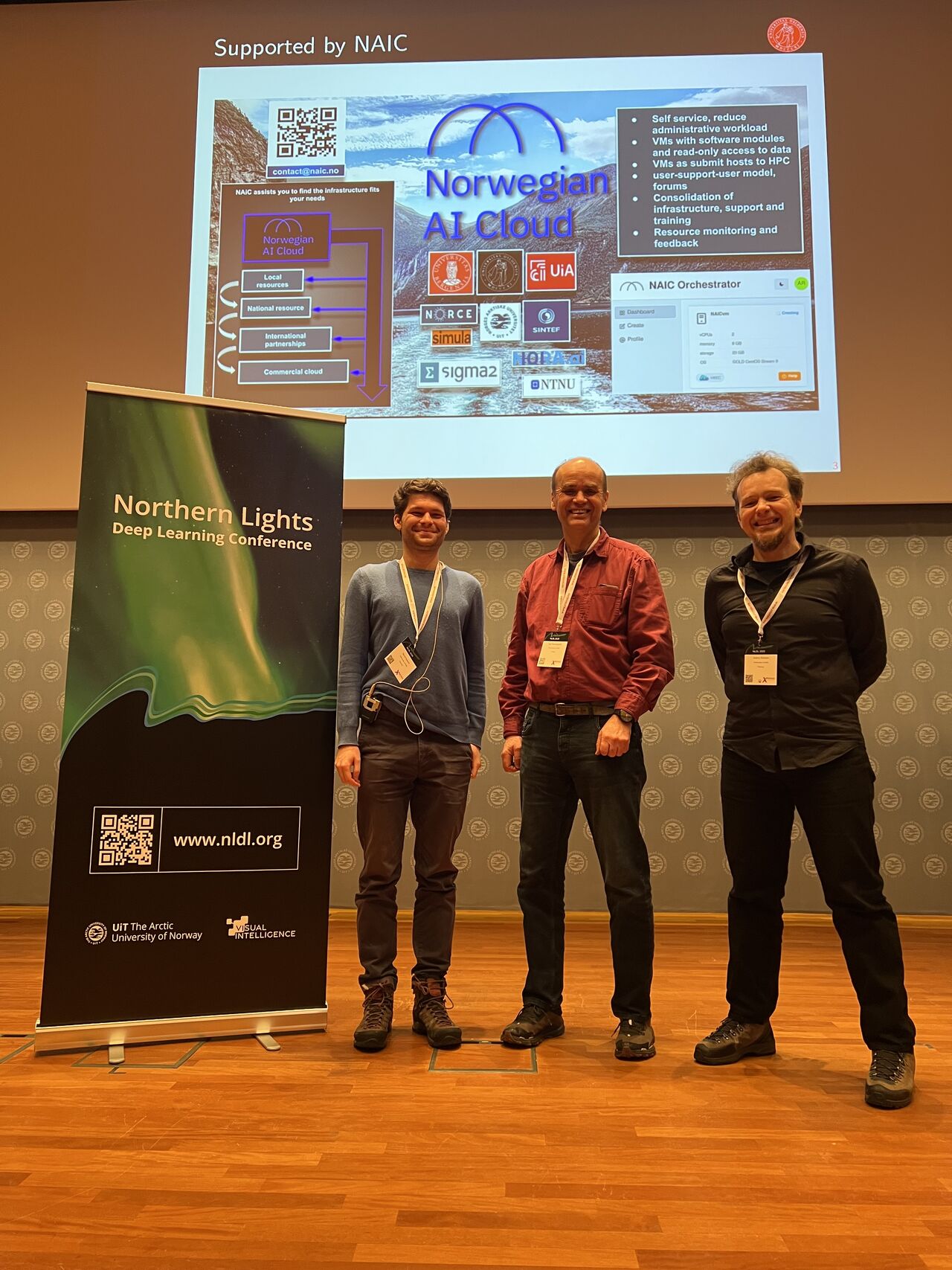
The Winter School tutorials. NORA's CEO Klas Pettersen described the last tutorial of the Winter School (Large Language Models Under the Hood) as follows: "this tutorial really shows the advantages of the concerted activities of the NORA collaboration. The Norwegian AI Cloud (NAIC) is providing compute and the Language Technology Group (LTG, University of Oslo) is providing language technology skills, all within the very nice winter school organized in Tromsø by SFI Visual Intelligence / the Machine Learning Group at UiT under the NORA Norwegian AI Research School." A successful collaboration, indeed!
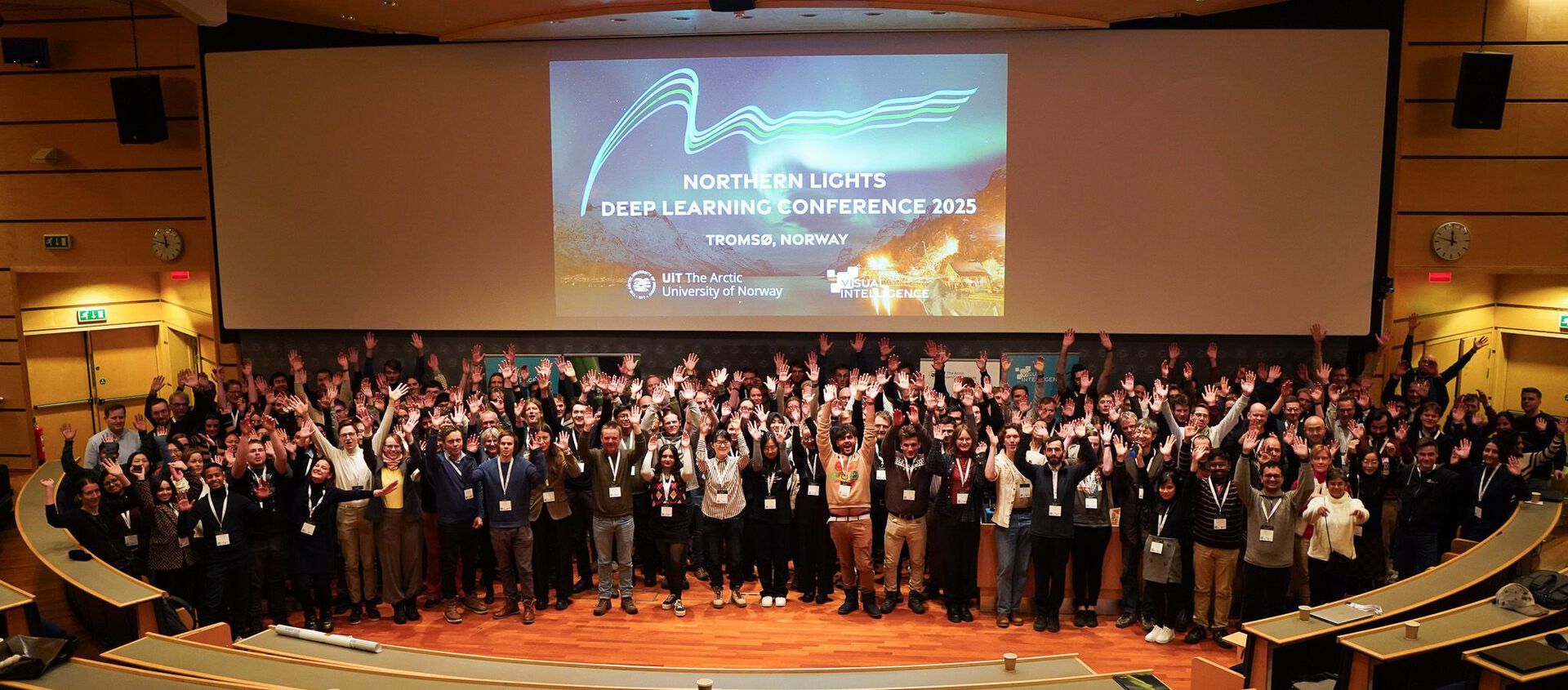
Social gatherings. During the winter school, NORA.ai also hosted social gatherings, to allow the 137 research school participants to get to know each other on a more informal basis. In addition to the dinner at Polaris on one of the evenings, there was also an informal industry session over pizza and drinks as part of the Industry & AI event, where several companies gave short presentations, with the aim of providing a broader view of where in different industries AI skillsets are required.
Become a member of NORA Norwegian AI Research School to join us next time!

MAIN CONFERENCE
Industry and AI. SFI Visual Intelligence, the host of the conference, summed it up as such: "This event consisted of an afternoon and evening session. The afternoon session gathered experts to discuss why AI is important for industry, how AI can provide additional value to industry, the problems that AI can potentially solve, and how academia and industry should collaborate on facilitating the safe and sustainable use of AI." Panelists Peter Munch-Ellingsen, Beate Sildnes, Sarina Thomas and Akhil Gopinath and moderator Martine Espeseth ensured an insightful and interesting session!
Diversity in AI. This year, the focus of this annual event was exploring this critical issue under the theme AI As a Mirror to Society. The aim of this session was to delve deeper into how AI inadvertently can reflect and perpetuate societal biases, and how misinformation or flawed data can lead to biased AI systems. Speakers Georgios Leontidis (Professor, University of Aberdeen), Lars Ailo Bongo (Professor, UiT), Marie-Francine Moens (Professor and Director, LIIR Lab at KU Lueven) and Monika Gabriela Bartoszewicz (Associate Professor, UiT), held interesting talks, and was later joined by more colleagues for a discussion on what effects biased AI has on all of us, and how it can amplify bias for underrepresented groups who have been subjected to biases historically, in particular. (More information on this session can be found on the NLDL website.)
The NORA panel discussion at the conference was led by Klas Pettersen with the panel members Bram van Ginneken, Michael Felsberg and Vedrana Andersen Dahl. The discussion encompassed a variety of topics - these were some of the key takeaways, as noted by our Senior Adviser Justine Dickhoff:
- AI’s growing power: We will soon have several systems that can do certain tasks better than humans.
- Healthcare improvements: To truly make progress, we need access to real patient data. However, trust, ethics, and safety must come first.
- Regulation and open-source: How should large models like ChatGPT be managed? Open-source AI is advancing but lags behind commercial AI by about two years. Should regulation be handled nationally, at the EU level, or elsewhere? What role should universities play?
- Big changes in science: AI is already transforming fields like structural biology (e.g., through AlphaFold). Change takes time and effort, but the results are worth it.
- Jobs and society: AI will change several jobs. Like past revolutions (from hunting to farming and the industrial revolution), AI could improve quality of life. The key is to make sure the benefits are shared fairly, not just kept by companies.
To achieve the intended results, AI will, as noted by Stefano Nichele, need to move beyond correlation based learning towards causal learning and compositionality, like in humans, and we need to investigate energy efficient learning algorithms similar to those in our brains, to address the energy consumption of current AI systems.
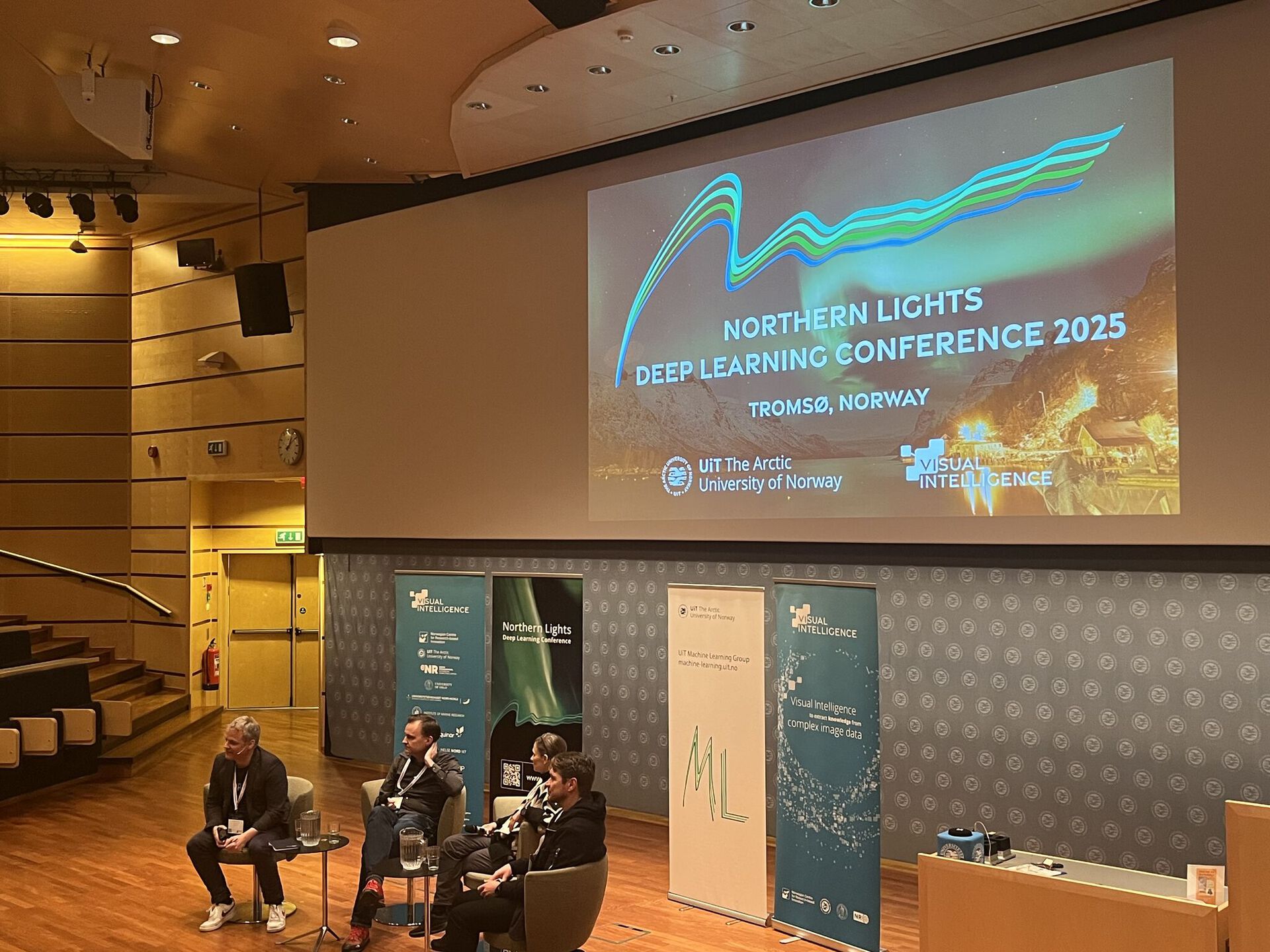
Last, but not least, we were happy to see that the world's northernmost AI conference also made it to the Norwegian news! Check out the segment on NRK District News for coverage of the event.
A big thanks to everyone who came out to the conference and winter school, and to our colleagues at UiT - The Arctic University of Norway for their excellent work - in particuar the team at SFI Visual Intelligence. We're already looking forward to next time!