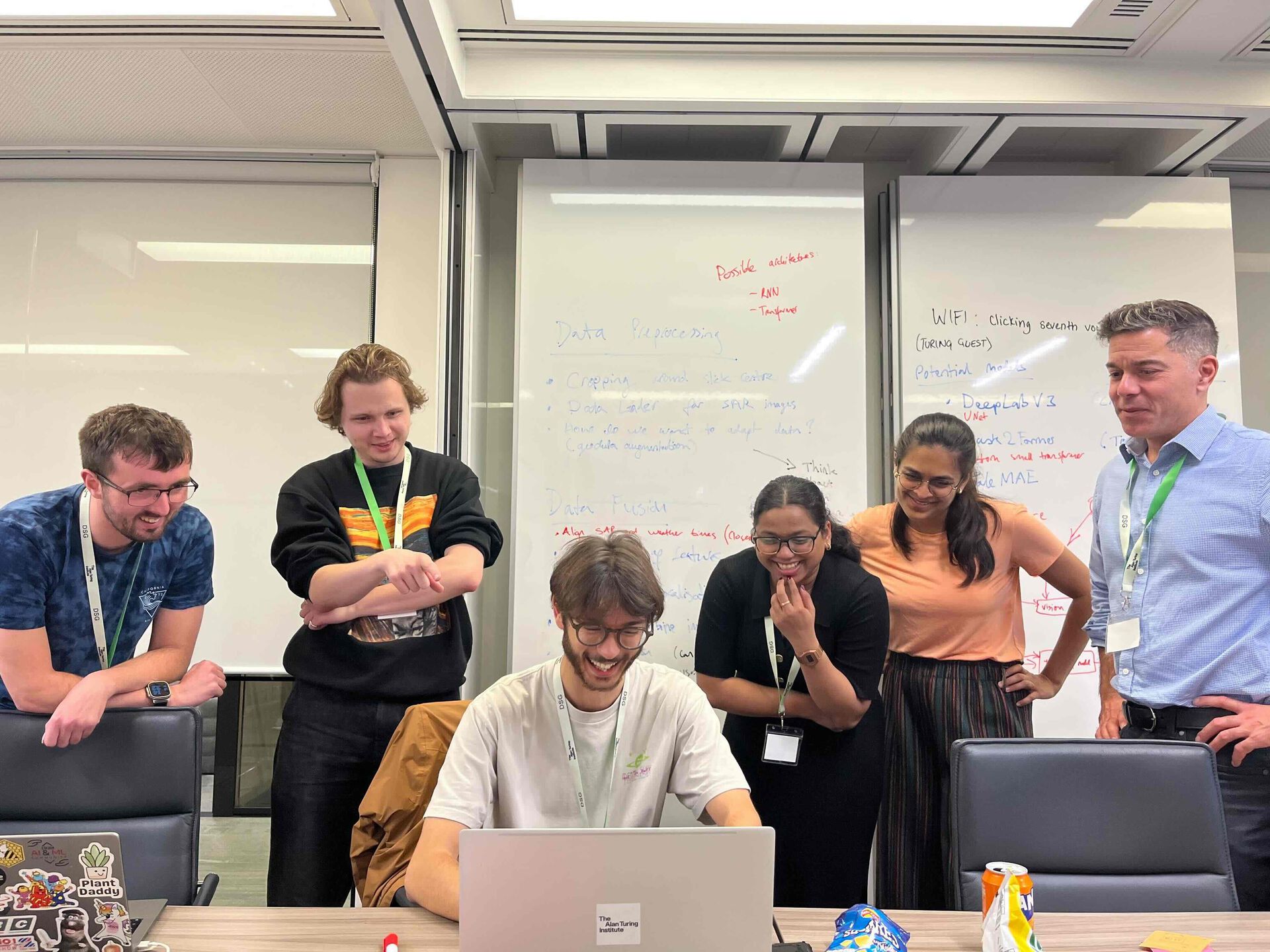
The PhD students who participated from NORA were:
- Chau Thi Thuy Tran at the Informatics & IFE department at UiO.
- Ryan Anthony Marinelli at the Informatics department at UiO
- Preben Ness, at the Validation Intelligence for Autonomous Software Systems at Simula.
The students' feedback described the Data Study Group as a great collaborative experience, reflective of the stresses one faces with industrial problems. They worked with time pressures and tricky data to clean, and leveraging each other's skills to clear hurdles helped them make interesting insights during the challenge:
- I liked collaborating with other PhDs and learning with them, getting into flows and bouncing ideas off each other, says Ryan Marinelli, who particularly appreciated the part of the challenge where people started breaking into sub-teams.
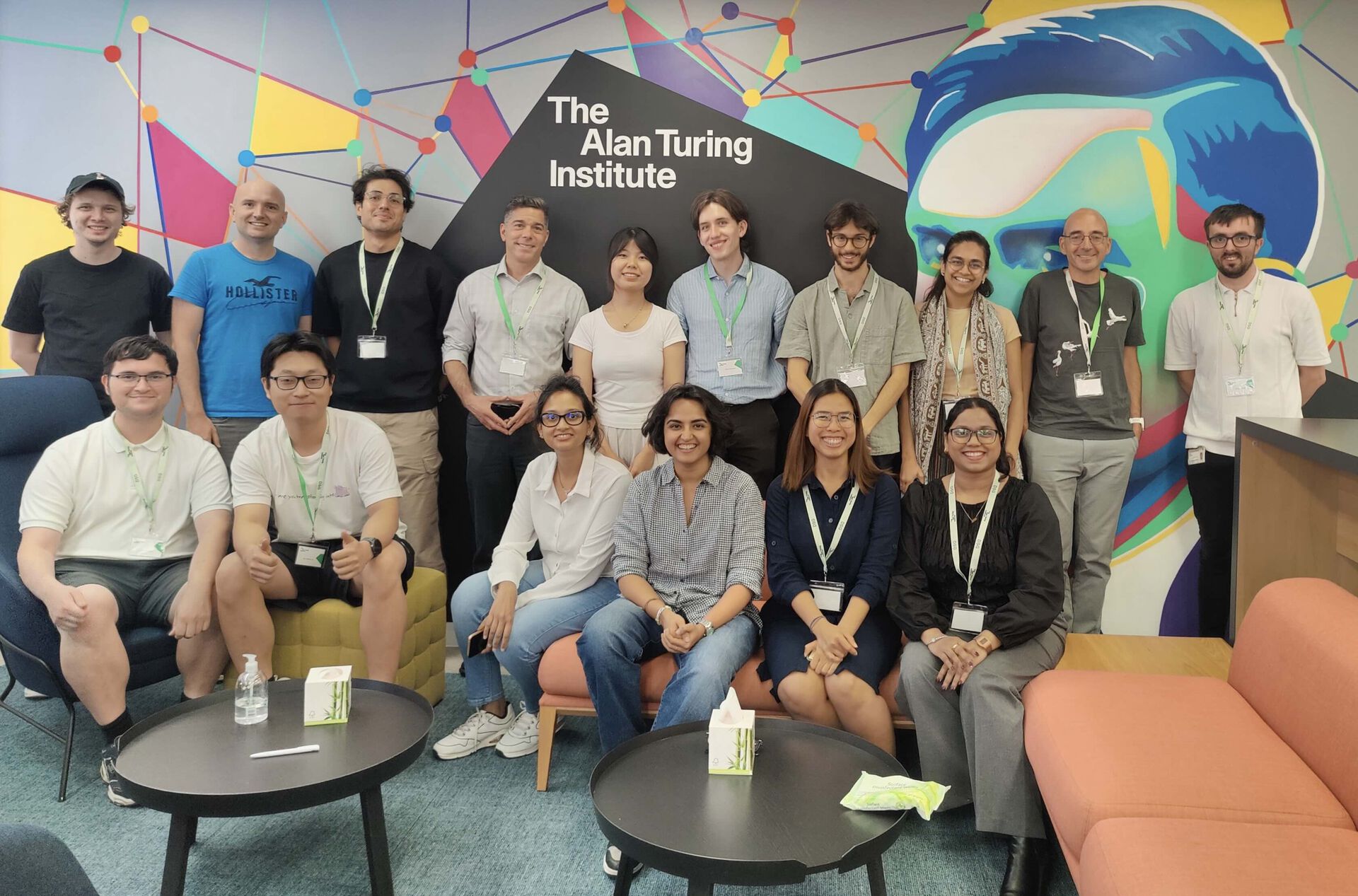
During their first week in the UK, the students met with researchers at the ATI. The Data Study Group (DSG) provides a great opportunity to both strengthen the collaboration between Norway and UK, and gives the NORA PhD students an opportunity to build their research network while working along with top UK students.
The second week of the DSG, the students - a small groups of highly talented, carefully selected researchers - solved real-world problems and datasets, provided by organisations that act as 'challenge owners'. This year, the challenge was provided by Cefas - Centre for Environment, Fisheries and Aquaculture Science, and was centered around detection of oil leaks from shipwrecks in satellite synthetic aperture radar images.
- It wasn't a hackathon in the traditional sense, explains Preben Ness. - We all collaborated on a common goal instead of competing on some benchmark. That was a nice change to the standard hackathon setup, and meant that everyone was very eager to help each other.
Ness further says that the diversity of the participants particularly benefitted them in the challenge: - It wasn't just "deep learning people", there were participants from all branches of data science and statistics. The teams were composed of people with a much broader range of backgrounds than I would have expected, which gave rise to some interesting ideas and approaches - I am not sure that would have been the case if we were all from the same field.
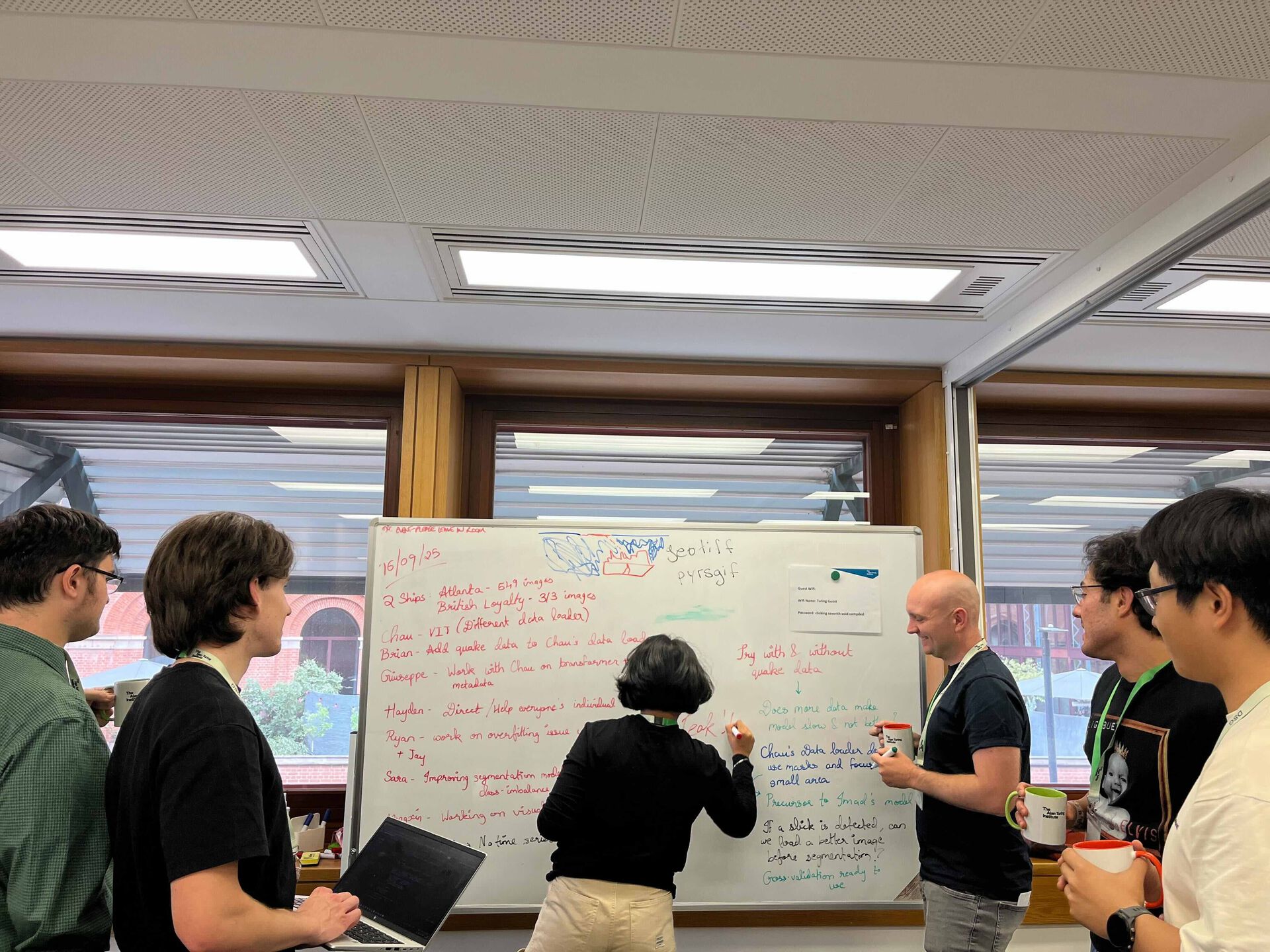
Chau Thi Thuy Tran found the Data Study Group experience to be fun and meaningful, and says that at the Alan Turing Institute was incredibly welcoming: - Even small moments, like sharing jokes or taking tea and coffee breaks, helped strengthen our bonds and ease the pressure of an intense week. I also loved the hands-on experience of turning ideas into practical solutions; seeing our concepts come to life was both exciting and deeply rewarding, and it made the week feel truly meaningful.
With that, we'd like to thank our Research School students for joining this year's Data Study Group program, and the Alan Turing Institute for this wonderful opportunity - we're already looking forward to future collaborations!