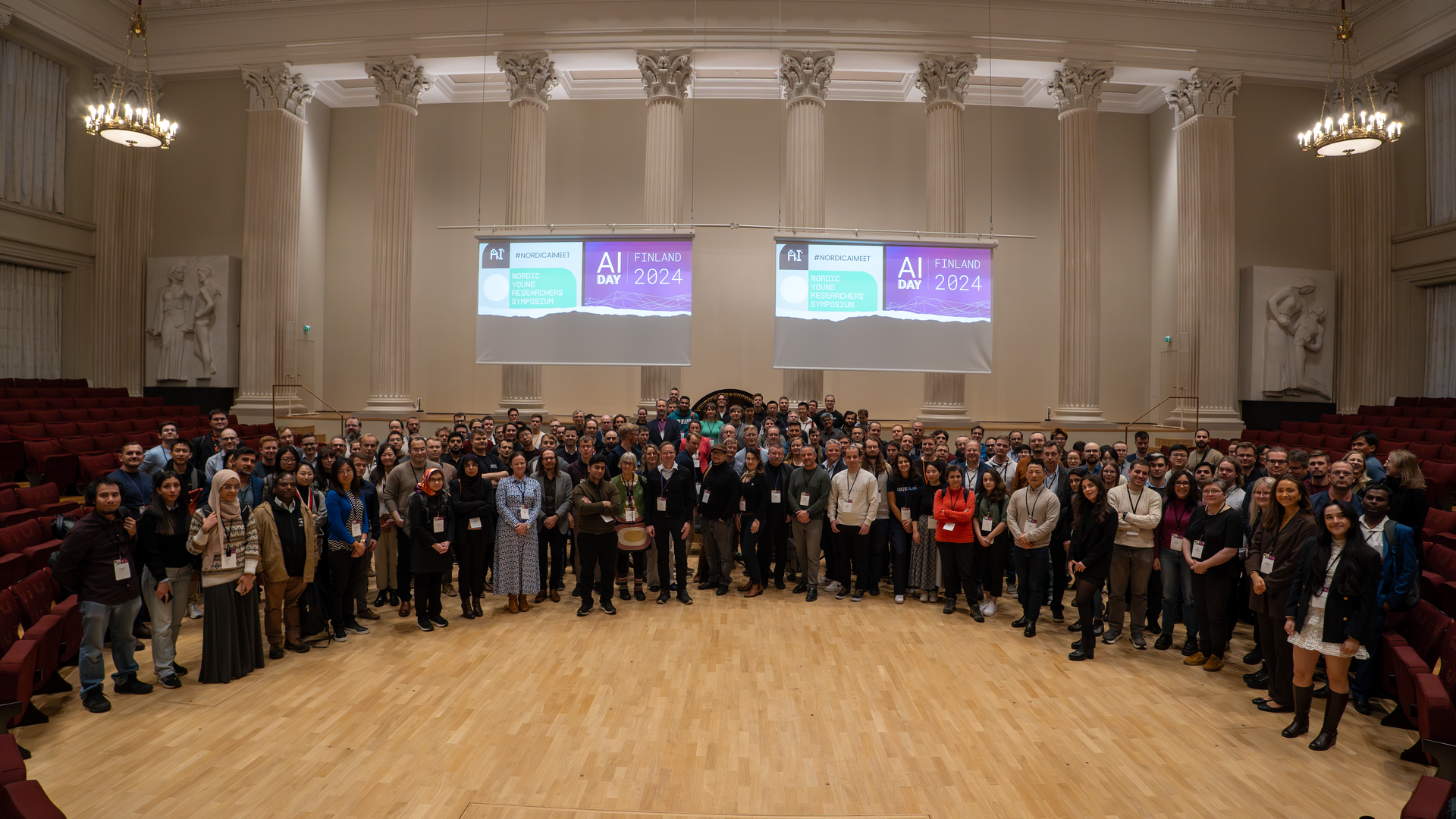
Nordic AI Meet was well visited by both experts and leaders within AI, but the focus was still on students and young researchers:
- In the Medical and Healthcare Applications track during the first day of the conference, Esten H. Leonardsen from the Universitety of Oslo presented his work Enhancing brain age with explainable artificial intelligence, done in collaboration with Thomas Wolfers, Lars T. Westlye and Yunpeng Wang:
Despite the emerging potential of brain age as a generalized biomarker for brain health, clinical translations are lacking. This is in part because of its abstract nature, simplifying the state of the whole brain to a single number. Explainable artificial intelligence can reveal the patterns underlying the apparent brain age in individual patients, presenting a plausibly more sensitive bio- marker to support clinical decision-making in neuropsychiatric disorders.
- Later that day, we got to hear about Scientific Computing and Engineering from Roman Khotyachuk at the University of Bergen, who presented Autoencoders-based Nonlinear Feature Extraction From Numerical Solutions of the Elder Problem, developed in collaboration with Klaus Johannsen.
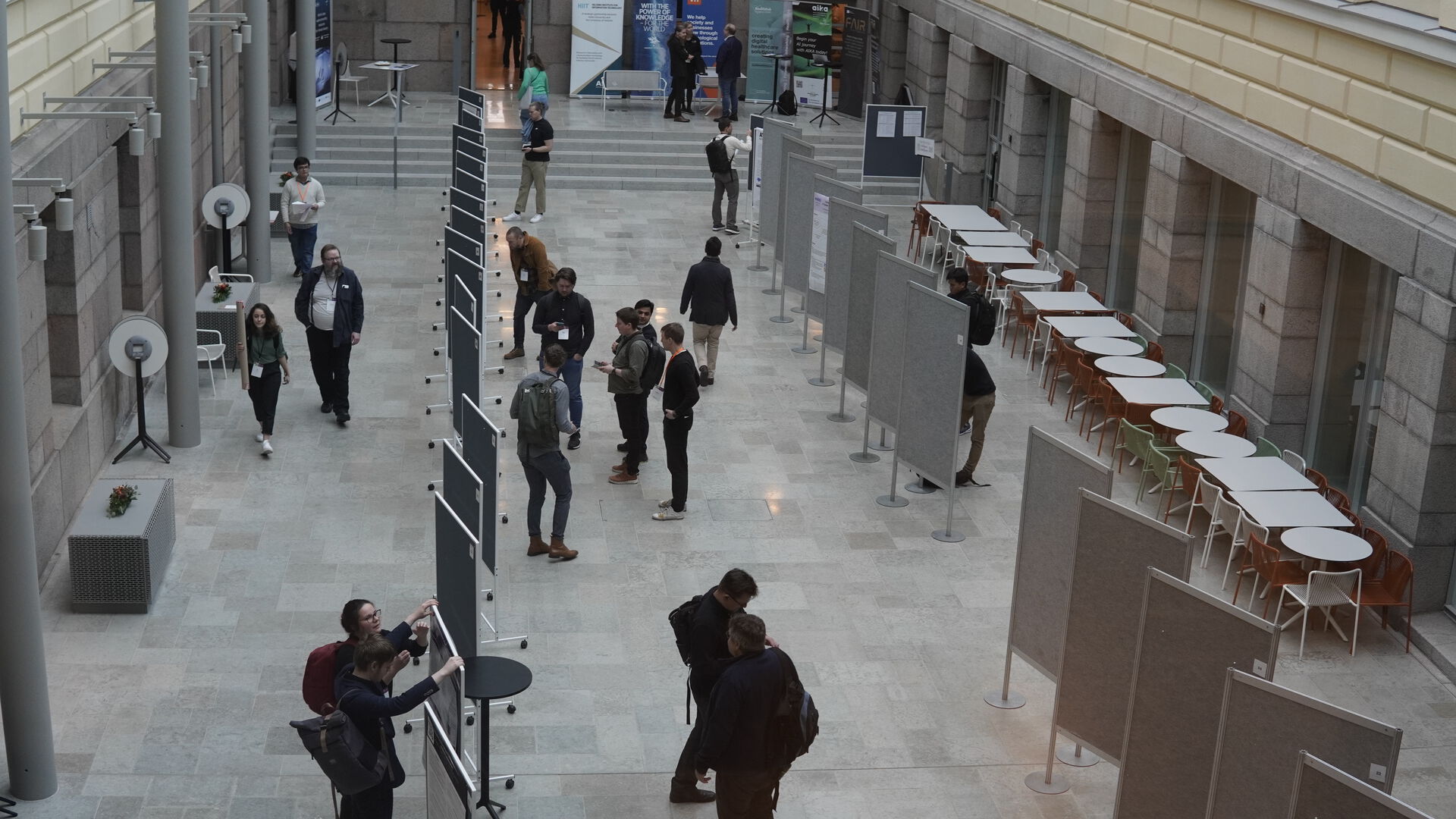
- Nirwan Banerjee at UiT The Arctic University of Norway, held the presentation Compact Image Representation by Detecting Distortion in Reflected Acoustic Waves on behalf of himself and his colleagues Samir Malakar, Dilip K. Prasad and Alexander Horsch:
The innovation of microscopic and nanoscopic imaging technology has opened several research directions in life science. However, these technologies create requirements for larger storage space and challenges for automatic analysis. There is an utmost requirement for storing large-sized images with less storage footprint and corresponding automatic analysis techniques. We devise a compact image representation technique that stores an image with a set of important pixels (...) The key idea of the work is to visualize a 2d image using the principles of acoustics, akin to how a bat would observe the world.
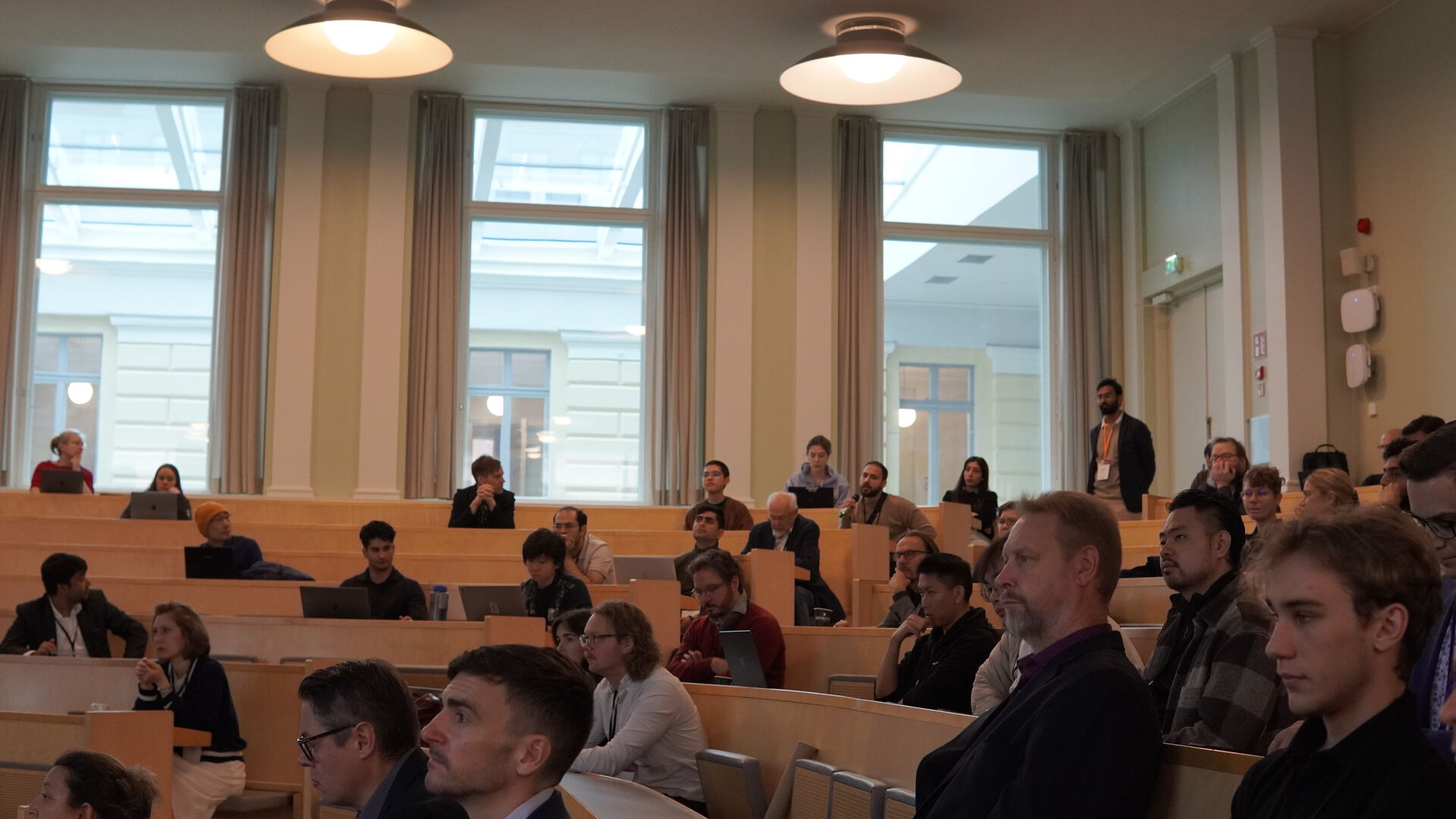
The students contributed with interesting finds for all who were present at Nordic AI Meet. Feedback showed that the young researchers who participated particularly found it useful to meet experienced researchers within their field, something which creates opportunities for future collaborations. The keynote speeches were also highlighted as parts of the program the students appreciated the most - that useful information was made available and provided new insights.
We'd like to thank everyone who came to Helsinki for this year's edition of Nordic AI Meet, and are already looking forward to next year - see you in Sweden!