
The collaboration with NORA.ai is valuable for Skanska because this enables a closer link with the leading academic ecosystem within artificial intelligence. We are convinced that smarter use of data will support Skanska in becoming even more sustainable by empowering decisions made in our projects and help us reach our goal of zero emissions by 2045, says Lars Horn, Chief Digital Advisor, Skanska.
About the competition
RoadAI was a competition hosted by NORA.ai in collaboration with Skanska, SINTEF, Ditio, USIT/ Norwegian AI Cloud and Nordic Machine Intelligence Journal. The competition invited teams from all over the world to take a deep dive into data from a road construction site in Viken, Norway. The data includes GPS data from dump trucks, machine data including daily fuel consumption, and drone maps of the construction site, in order to develop an algorithm to help reduce CO2 emissions in road construction.
The competition proposed three tasks:
- Develop an algorithm to improve sustainability - demonstrate the potential for improved sustainability impact from using data.
- Provide a deployment plan - describe system and data requirements as well as potential challenges for deployment. Are there any ethical issues?
- Transparency - evaluate the transparency of the developed system including explanations for how the models were trained, interpretation of predictions, risk assessment and clear guidelines for usage.
The team behind the RoadAI competition recommended an exploratory approach when solving the set tasks and encouraged innovation when developing solutions. All participating teams were asked to submit a two page paper describing their method and results. The submitted papers were reviewed single blind and will be published. Outstanding submissions will be invited to submit a full length paper to a special issue about the competition in the Nordic Machine Intelligence Journal.
The competition saw great interest and over 20 teams registered to compete for the winning prize. The RoadAI Team have been impressed by the dedication of each team, by their creative approaches to each task, and for the innovative results submitted!
We want to congratulate Think Evolve for winning the RoadAI Competition 2023! As the winner, Think Evolve will receive 35 000 NOK.
We would also like to extend our congratulations to team NoDig and Data Roadsters, who were the runners up(both second place) in the competition! Congratulations to all on your excellent efforts!
We would also like to extend our gratitude to Skanska for making this competition possible.
In all projects, Skanska has high ambitions and high standards for reducing CO2 emissions. Skanska has the ambitious goal of reducing emissions by 70% by 2030 and be climate neutral by 2045. To achieve this goal, enhancing the eco-friendliness and sustainability of construction is crucial, with data playing an even more significant role in this context.
Below, you can meet the people behind team Think Evolve, NoDig and Data Roadsters.
Think Evolve

How did your team come across the competition?
Aakash learned about the competition through one of the climate-focused groups. He had signed up for the Climate Change Summer School, and through their discussion forums heard about the RoadAI challenge.
What triggered your team to participate in the competition?
We are an AI lab based out of India and USA. The company was set up in 2014 with a focus on AI solutions. Since then we have developed substantial expertise in building computer vision solutions which have an impact on climate change and sustainability. Our platforms are being employed by the Indian state government.
Solving a real business problem which has a sustainability impact is one of our main motivations for starting our AI Labs. Consequently, the RoadAI hackathon presented us with an invaluable opportunity to elevate our concept from its MVP stage to a fully production-ready platform.
What was your biggest take away from the competition?
The Road AI dataset was very unique in the sense that it was a reflection of what our data scientists see in real-life. So the challenge helped us to innovate outside of the box to create an innovative solution based on the available data.
During a road construction project, GHG emissions can occur from direct emissions, disturbances in vegetation and embodied carbon.The solution combined satellite and drone data with sensors on the ground to provide a framework for reducing the carbon footprint of the construction project.
Another key takeaway is the need for frequent communication with the sponsoring team. This two-way communication helps in building trust and helps clarify the thought process of the users. I believe the quick response provided by the mentors helped us in architecting the solution.
We would also have loved to connect with the participants in the networking event during the NordicAI Young AI professionals meetup that was organised on 2nd and 3rd October 2023. However, due to our selection just a week before the event, we couldn't arrange the logistics to attend!
This competition focused on reducing CO2 emissions in road construction. What are your thoughts on using AI in the construction industry? What are the benefits, and what are the challenges?
There are many facets of the construction industry. As part of understanding the context of the hackathon and gaining domain knowledge, we did an initial survey of industry professionals. We reached out to large builders, engineers in road construction and financing agencies which lend for such large scale projects.
While there is a low penetration of AI in construction, the scope of implementing it for process enhancement is substantial. Large scale monitoring of satellite images can help in identifying the stage of construction of road projects. Automated progress monitoring can also be performed using drone imagery. Quality of road construction is another facet where AI can be utilised. We can assess and accurately measure the impact of construction on the environment at the planning stage.
Amongst other, the benefits are:
- Efficiencies and cost savings due to automation
- Reducing the impact on environment through accurate estimations using drone and satellite imagery
- Route planning leading to reduction in fuel consumption
When it comes to challenges, construction is a brick-and-mortar business. People who work in the industry have deep domain knowledge which is built over time. As such they are reluctant to change their established processes. Suggestions from outsiders may also not be welcome.
What is the most exciting part of working with AI for you?
What truly ignites our passion for working with AI is the prospect of tackling real-world business challenges head-on. AI is spearheading a transformative wave across industries, akin to a modern-day industrial revolution. Being an integral part of this fourth industrial revolution is our source of enthusiasm. Moreover, the opportunity to actively contribute to the reduction of carbon footprint further fuels our excitement in this AI-driven journey.
Data Roadsters
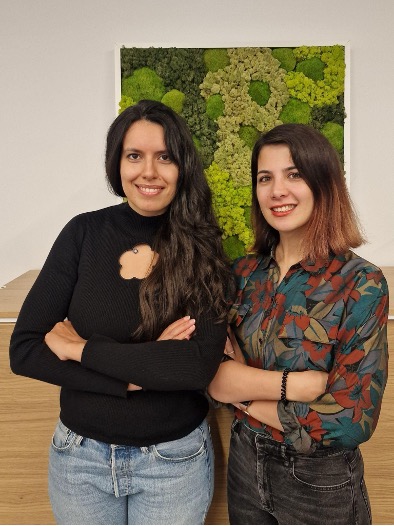
How did your team come across the competition?
Eleonora has attended several NoraAI events and is subscribed to the mailing list. She found out about the competition through the mailing list.
What triggered your team to participate in the competition?
We decided to join the competition for a couple of reasons. First, we wanted to show that we can use our skills in different industries and learn new things. Second, we were interested in the challenge of cutting down on CO2 emissions, which is a big environmental problem. We wanted to help out and show that we can adapt and work in different situations.
What was your biggest take away from the competition?
The competition showed us once more the value and importance of data in any machine learning project. It's not just about fancy models; it's about knowing what you can learn and extract from the data. Also, it reminded us that we can make smarter choices by using data and machine learning to get good insights and make informed decisions.
This competition focused on reducing CO2 emissions in road construction. What are your thoughts on using AI in the construction industry? What are the benefits, and what are the challenges?
Integrating AI into the construction industry presents both potential advantages and challenges. One of its core values lies in optimising vehicle scheduling to minimise queueing, ultimately leading to enhanced efficiency and reduced environmental impact.
However, this journey is not without its obstacles. To successfully harness AI's potential, collaboration with industry experts is indispensable. Their contextual knowledge, often not easily derived from data alone, proved invaluable when we encountered project complexities.
To further enhance model performance, combining a variety of approaches from different data sources can be beneficial. Yet, the effective integration of diverse data sources demands meticulous planning and execution.
In essence, AI in construction offers substantial value, from optimising vehicle schedules to promoting efficiency and sustainability. However, its full potential is realised through a collaborative approach with industry experts and careful consideration of data diversity and real-world complexities.
What is the most exciting part of working with AI for you?
AI has the potential to discover new insights and patterns in data, which makes it a fascinating field to explore. It's interesting that we can use the same tools to solve a wide range of problems. This adaptability allows us to automate tasks, reduce errors, and improve precision.
Team NoDig
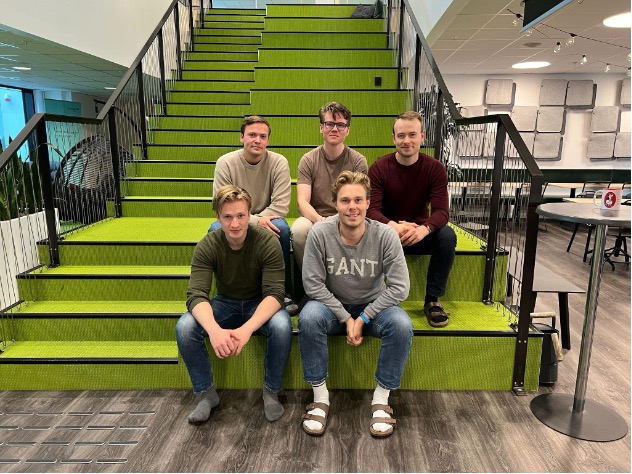
Bottom from the left: Øystein Stavnes Sletta, Ole-Magnus Høiback
How did your team come across the competition?
Our leader informed us about the competition just before it kicked off because she thought it would be fun and educational for our new hires to compete together with their colleagues.
What triggered your team to participate in the competition?
We thought it was a great opportunity for our newly graduated colleagues to experience what it is like to work with data from one of Norconsult Digital’s typical customers, while keeping the atmosphere fun and educational.
What was your biggest take away from the competition?
The biggest takeaway was seeing the untapped potential of AI in the construction sector. We saw how easily data can be collected and used to optimize operations and reduce environmental impact. It underscored the importance of collaboration and innovation in addressing global challenges.
This competition focused on reducing Co2 emissions in road construction. What are your thoughts on using AI in the construction industry? What are the benefits, and what are the challenges?
We believe that AI can benefit project planning and management in road construction through more efficient resource utilization, reduced waste, and, as with RoadAI, lower emissions. However, challenges include data quality and availability, industry-wide adoption, and the need for skilled AI professionals.
What is the most exciting part of working with AI for you?
With AI, we can harness the power of data to solve complex problems and create a positive impact on society. The continued innovation in the field makes every project a thrilling opportunity to push the boundaries of what's possible.
The team behind the competition:
- Lars Horn, Chief Digital Advisor, Skanska
- Signe Riemer-Sørensen, Research Manager and Senior Researcher, SINTEF Digital
- Helga Margrete Bodahl Holmestad, Research Scientist, SINTEF Digital,
- Katarzyna Michalowska, PhD Fellow, SINTEF Digital
- Bjørn Jostein Singstad, Researcher, Oslo University Hospital and University of Oslo. Responsible for Nordic Machine Intelligence Journal