The seminar featured prominent keynote speakers introducing large language models, taking us through both the pros and cons of this rapidly developing technology, reflecting on impressive use cases as well as what we might want to avoid. The event also featured an interesting panel discussion about the ethics of large language models, before the remaining half of the seminar took us through a technical deep dive for an even closer look at the technology discussed.
After providing a light breakfast for the early birds arriving to attend the seminar, the CEO of NORA.ai, Klas Pettersen, provided a brief introduction to the topic and what to expect from the seminar series in the future. "…we will further use the CuttingEdgeAI-seminars as a window to communicate and discuss with industry, start-ups and society as a whole. We will democratize AI, and we will make it more transparent through having the discussions we will have today".
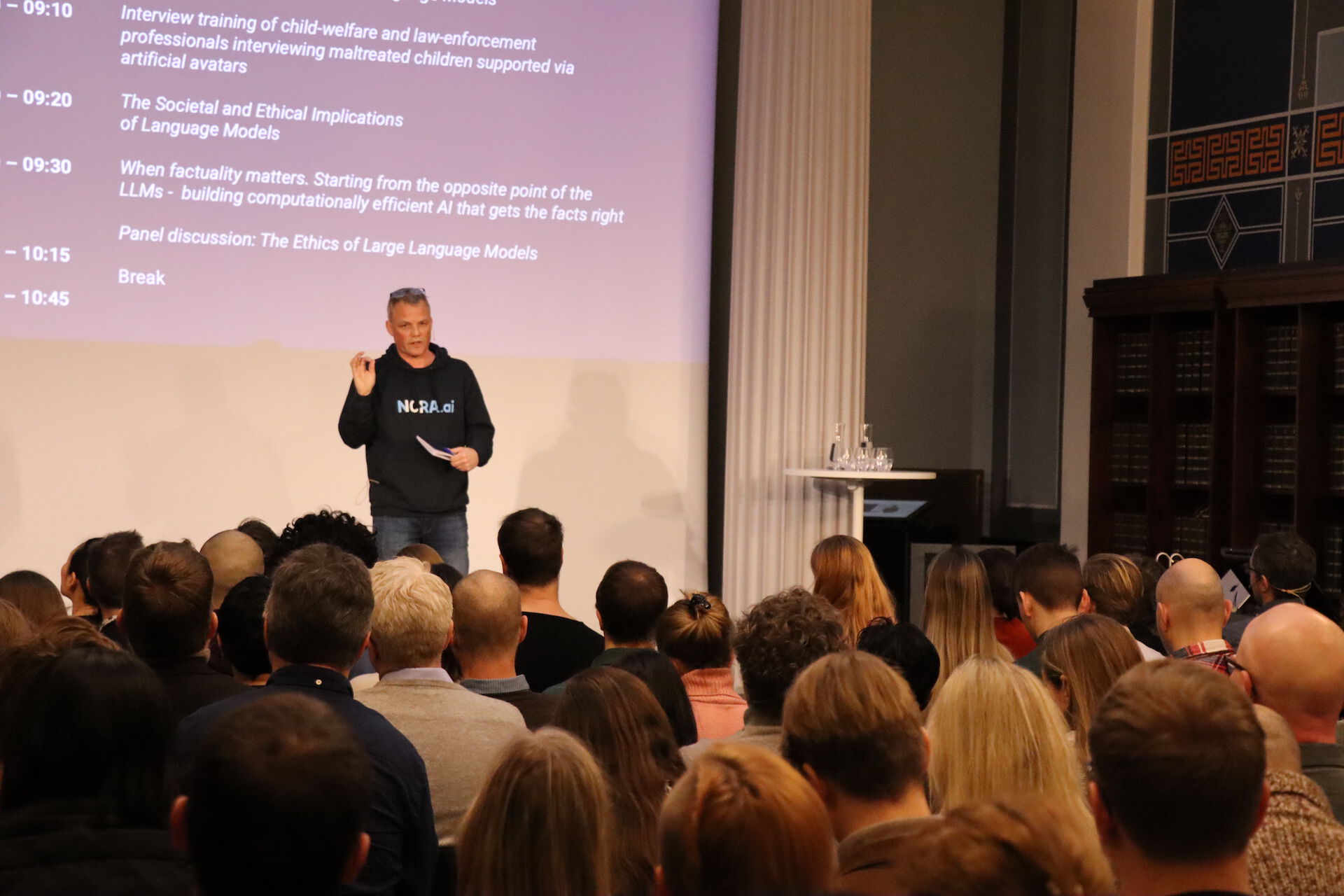
Following Klas´ introduction, Lilja Øvrelid, a Professor at the University of Oslo, provided a virtual keynote about ChatGPT, followed closely by Pierre Lison from The Norwegian Computing Center (Norsk Regnesentral), discussing the potential benefits of implementing these large language models.
Chief Research Scientist at Simula, Michael Riegler, then presented a keynote illustrating a very fascinating use case where child welfare and law-enforcement professionals had used artificial intelligence to create avatars. The avatars allowed said professionals to practice having these difficult conversations with children who have suffered mistreatment.

Samia Touileb's keynote addressed some of the more cautionary tales rising from these rapid technological developments by discussing the societal and ethical implications of these large language models, introducing some of the themes that were to be discussed in the upcoming panel debate.
The last keynote speaker presentation before lunch was Anita Schjøll Abildgaard, CEO and founder of Iris.ai. Anita some of her experience on building not only large but smart language models, for when factuality matters,- for instance when applying AI when working with scientific data material.

The panel debate was moderated by Klas Pettersen and featured Per Erik Solberg from Språkbanken at Nasjonalbiblioteket, Anita Schjøll Abildgaard, CEO of Iris.ai, Samia Touileb from MediaFutures at UiB, Eivind Throndsen, Product Manager at Schibsted and Sten Ludvigsen from UiO. The panel discussed some of the most pressing issues related to the ethics of Large Language models and how they may influence our societies in the future.
Technical Deep Dive
Samia Touileb introduced the technical deep dive, followed by an engaging presentation by Andrey Kutuzov, Associate Professor at the Research Group for Language Technology at UiO, aimed at demystifying the inner workings of large language models. Victor Botev, CTO of Iris.aI, then provided the audience with some insights into the technical perspective of Iris.ai´s technology and how they tackle problems relating to lack of data for fine-tuning and injection of knowledge for applications where adherence to facts matters.
Per Egil Kummervold, Senior Researcher at the National Library of Norway, presented and explained the institution's efforts in releasing numerous open datasets and language models. Per Egil provided a demonstration of data preparation and fine-tuning a language model such as T5. Arjun Chandra, an independent AI researcher, engineer and founder of Brua.ai, ended the session with a detailed account of the architecture of chatbot models such as ChatGPT relating to training and deploying Large Language Models in a reliable manner.
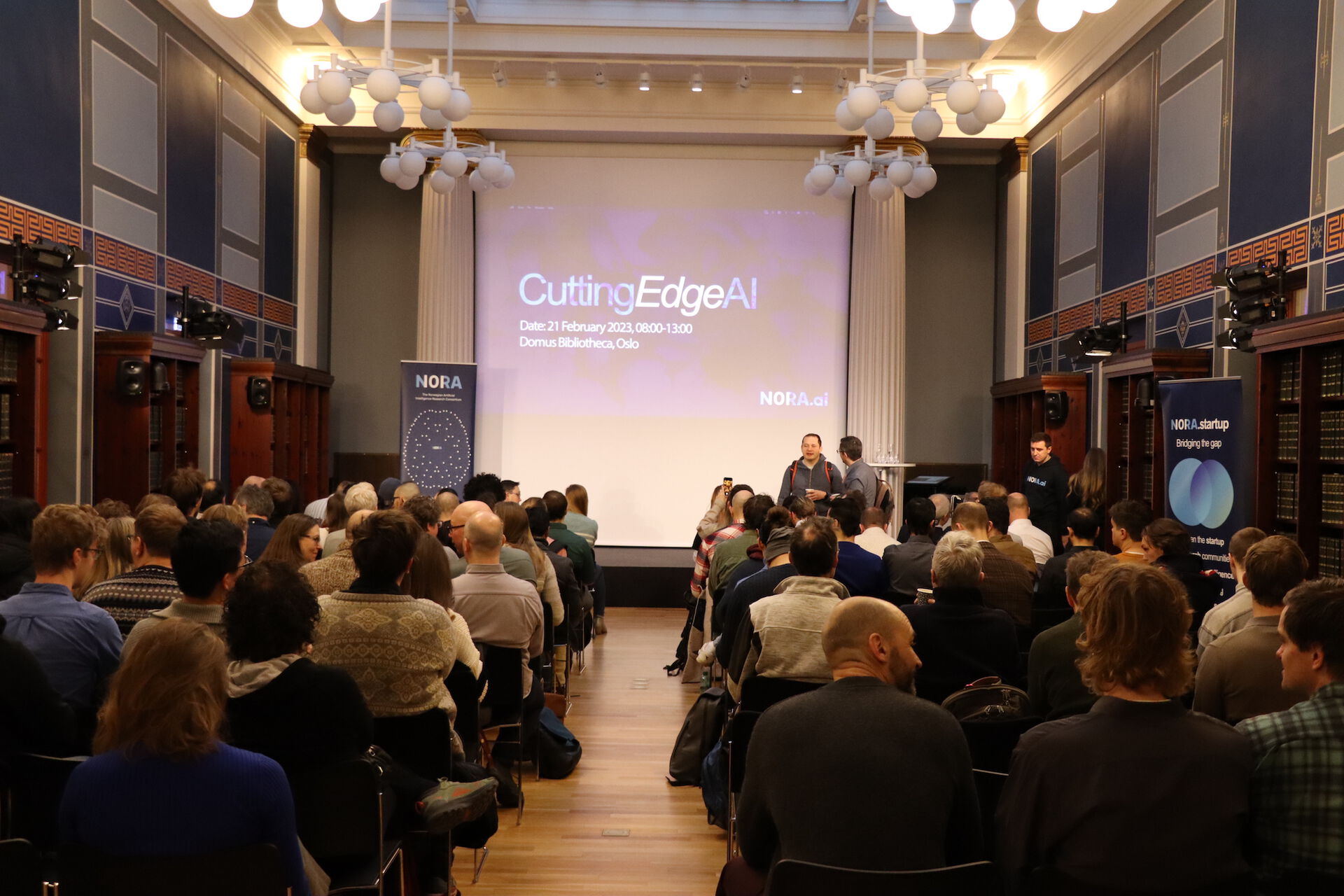
Thank you to all keynote speakers, to our volunteers and to everyone who attended either physically or digitally. A big thank you also goes out to Domus Bibliotheca for hosting the event.
We are pleased to announce that registration for our second event on May 11th at Domus Bibliotheca is already open. While the topic has not yet been announced - we promise you will focus on the latest cutting-edge technology within AI.
This articles was originally published on the 28th of February, 2023.